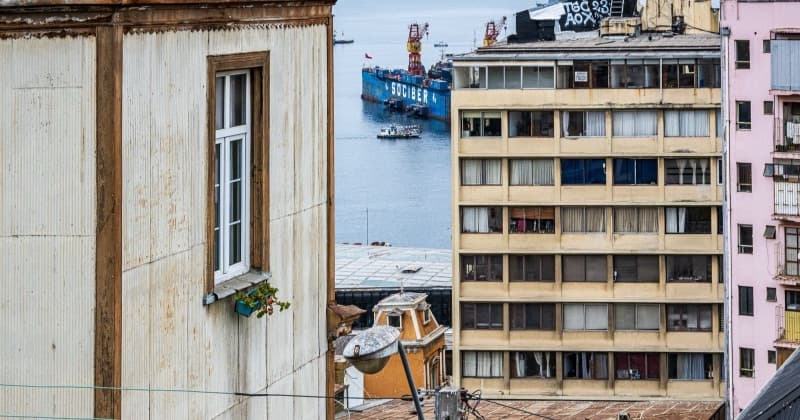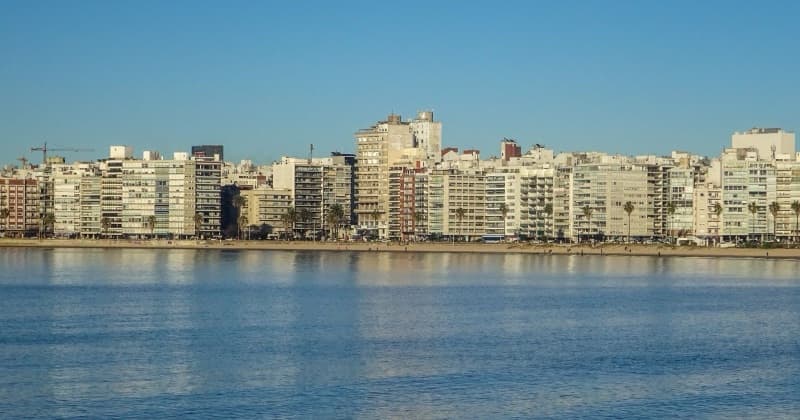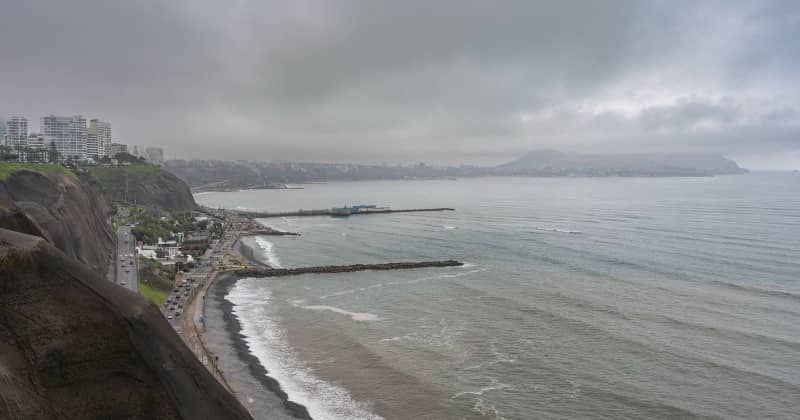
Few countries will give you residency with no end date for proof of a modest pension and a government fee of under S/ 200. Peru does. Show Migraciones a net, permanent income of at least US$1,000 a month, and the rentista status that comes back has no renewal date. You don't have to buy property, park a deposit or re-qualify every year. Add Lima's restaurants, Arequipa's year-round sun and a central Miraflores one-bedroom for roughly the price of a Calgary basement suite, and the pitch writes itself.
Here's the catch. Peru has had nine presidents in a decade, the latest sworn in on July 28, 2026, after a runoff decided by fewer than 50,000 votes. Ottawa tells Canadians to exercise a high degree of caution across the whole country, and states of emergency are in force in Lima and Callao because of violent crime. Public healthcare for a retiree means SIS, a free but basic safety net; EsSalud, the social-security system, is for people who work in Peru. Cusco sits at about 3,400 metres. And Peruvian tax law is ambiguous on the question retirees care about most: whether SUNAT taxes your CPP and workplace pension at all.
None of that rules Peru out. It means Peru rewards homework more than most destinations do, on both the Peruvian side and the Canadian exit side, which usually costs more.
The Cost of Living Case
The figures below are crowd-sourced Numbeo prices as of October 2026, converted at roughly S/ 2.40 per Canadian dollar (the early-October 2026 rate). Small-city samples are thin, so treat them as ranges, not quotes.
| Category | Peru (typical) | Canada (comparison) | Notes |
|---|---|---|---|
| 1-bed, central Lima (Miraflores, Barranco, San Isidro) | S/ 2,000–3,230/mo ($830–$1,350) | $2,000–$2,800/mo (central Toronto) | Expat-grade furnished units are often quoted in US dollars |
| 1-bed, central Arequipa | S/ 700–2,290/mo ($290–$950) | $1,500–$2,000/mo (central Calgary) | Peru's second city, and its best value |
| 1-bed, Cusco | S/ 500–1,000/mo ($210–$420) | — | Thin sample; furnished places in San Blas cost more |
| 1-bed, north coast (Piura, Trujillo) | S/ 500–1,100/mo ($210–$460) | — | Beach towns like Máncora price seasonally |
| Inexpensive restaurant meal | S/ 10–30 ($4–$12.50), Lima | $18–$35 (Toronto) | The set-lunch menú is the low end |
| Basic utilities, 85 m² | S/ 170–400/mo ($70–$165), Lima | $130–$350/mo (Toronto) | No heating bill on the coast |
| Home internet | S/ 70–160/mo ($29–$67), Lima | $50–$110/mo (Toronto) | Fibre is common in central Lima |
Peru's economy is partly dollarized, so better-district rents and property are often priced in US dollars, and your costs will move with USD/CAD as well as with the sol. Imported groceries, international health insurance and flights home are priced at world rates.
Healthcare Deserves Its Own Conversation
Peru runs three health systems, and as a foreign retiree you'll probably end up relying on the one that costs money.
SIS Para Todos, run by the Ministry of Health's insurer, is free for anyone living in Peru without other insurance, regardless of income. You enrol online with a DNI or a carné de extranjería. It covers care in public facilities, which are crowded, Spanish-only and uneven outside Lima. It's a safety net, not a plan.
EsSalud is Peru's social-security health insurer, funded by payroll contributions. It covers people who work in Peru, their dependants, and Peruvian pensioners. A Canadian retiree who never worked in Peru never paid into it and isn't covered. Its voluntary plan for people outside the payroll system, +Salud Seguro Potestativo, has suspended new individual enrolments until December 31, 2027. Unless you move to Peru as an employee, plan as if EsSalud doesn't exist.
Private care is where most Canadians are treated. Lima's large private clinics (Anglo Americana, Ricardo Palma, Delgado, Internacional and others) offer specialists, imaging and surgery at a standard Canadians would recognize. Arequipa has capable private clinics. Cusco's are limited, and serious cases get sent to Lima.
| Option | Typical cost | Age limits and catches |
|---|---|---|
| Peruvian private insurers (Pacífico, Rímac, Mapfre, La Positiva) | Roughly S/ 75–520/mo ($30–$215), from a basic plan for a young adult to a premium plan for an older one, per a Peruvian comparison site | New members are commonly capped at 65 (Pacífico's EPS application says 65 inclusive); pre-existing conditions are excluded or put on waiting periods |
| International expat plans | Priced in USD; usually several times local cost past 60 | Often accept new members past 65; pre-existing conditions are underwritten |
| Pay as you go | GP visits and lab work are cheap by Canadian standards | One hospital stay can erase years of premium savings |
Get written quotes at your actual age before you give notice on your Canadian life. The age-65 cut-off on local plans catches people: if you're 63, insure before your birthday locks you out.
Mind the provincial gap. Provincial coverage generally ends once you've moved away permanently, and each province sets its own cut-off. Even while it lasts, out-of-country claims are reimbursed at provincial rates, a fraction of a Lima clinic bill. Have a policy in force the day you land, not when your carné arrives.
Altitude Is a Health Decision
Global Affairs Canada warns that altitude illness becomes a risk from 2,500 metres and can be life-threatening. Arequipa sits at about 2,300 metres, the Sacred Valley around 2,900, Cusco about 3,400 and Puno near 3,800. Arequipa is usually a non-issue, and Cusco takes a week or two of adjusting. If you have a heart or lung condition, sleep apnoea or anaemia, see your doctor before signing a highland lease. Many retirees live on the coast and visit the sierra.
Climate Varies More Than You Think
Seasons are reversed from Canada's: summer runs roughly December to April.
| Region | Summer (Dec–Apr) | Winter (Jun–Oct) | Character |
|---|---|---|---|
| Central coast (Lima) | Sunny, warm, humid | Months of grey, damp garúa mist | It almost never rains, yet the winter sky stays overcast |
| North coast (Piura, Máncora, Trujillo) | Hot, sunny | Warm, mostly sunny | Peru's best beach weather; El Niño years bring floods |
| Southern sierra (Arequipa) | Some afternoon rain | Dry, sunny days, cool nights | Sun most of the year at moderate altitude |
| High sierra (Cusco, Sacred Valley, Puno) | Rainy season | Bright days, near-freezing nights | Most rentals have no central heating |
| Selva (Iquitos, Tarapoto) | Hot, humid, wet | Hot, a little drier | Iquitos is reachable only by air or river |
Lima also sits above the subduction zone where the Nazca plate dives beneath South America, the source of Peru's largest earthquakes, so check the building before the view.
Where Canadians Are Settling
Lima gets most foreign residents, for the healthcare, the airport and the food. Miraflores is the default: clifftop parks over the Pacific, walkable streets and the most English in Peru. Barranco next door is the arts-and-bars district with more character per square metre. San Isidro is the quieter financial district, with some of the city's safest streets.
Arequipa is the sleeper pick: a white volcanic-stone colonial centre under three volcanoes, sunny most of the year, cheaper than Lima, with decent private healthcare and a short flight to the capital. Expect fewer English speakers.
Cusco and the Sacred Valley attract people who came for Machu Picchu and stayed. Urubamba and Pisac, slightly lower than Cusco, have a small foreign community. Altitude, limited hospitals and a tourism-dependent economy are the trade-offs.
The northern beaches (Máncora, Punta Sal, and Huanchaco near Trujillo) offer real sun, warm water and the coast's lowest rents, but basic healthcare. They're more often a winter base than a full-time home.
If you're comparing neighbours, see our guides to Colombia, Mexico, Costa Rica and Panama.
Navigating Peru's Residency System
Canadians can visit visa-free for up to 183 days in a 365-day period, counted from your first entry. The officer at the border decides how many days you actually get, and a shorter stay can be extended up to that limit. That's enough to scout, but not to live. Long-term status runs through the Superintendencia Nacional de Migraciones, mostly online, with a stated processing time of 30 business days.
| Status | Who it's for | Financial requirement | Duration | Government fee |
|---|---|---|---|---|
| Rentista | Retirees and others on permanent passive income | Net permanent income of at least US$1,000/month (about C$1,400) from a pension or other permanent source | Indefinite | S/ 58.80 from abroad; S/ 161.40 to change status inside Peru |
| Inversionista | People setting up or capitalizing a Peruvian business | At least S/ 500,000 (about C$208,000), wired in one international transfer | 365 days, renewable | S/ 57.60 from abroad; S/ 161.40 inside Peru |
| Permanente | Residents after 3 consecutive years as a worker, investor, researcher or religious worker | — | Indefinite | — |
| Naturalization | Long-term residents | Currently 2 consecutive years of residence plus an exam; a 2025 law raises this to 5 years (see below) | Citizenship | Per Migraciones's fee schedule |
The Rentista, in Detail
The threshold is net and permanent. Migraciones asks for a document from the country the income comes from, showing a net permanent income of at least US$1,000 a month.
- Net means after tax. As a non-resident, you'll have Canada withhold 15% from CPP, OAS and pension payments (see the treaty section). Size the gross to clear about C$1,400 after withholding, with room for exchange-rate swings. A full OAS pension ($762.50 a month) doesn't clear the bar alone. OAS plus a moderate CPP usually does.
- Permanent favours lifetime income. Service Canada statements for CPP and OAS, and a defined-benefit administrator's letter, fit the "pensión de jubilación" wording cleanly. A RRIF is a finite account, so an officer may not treat it as permanente. Don't build an application on RRIF draws alone. A life annuity bought with part of the RRIF fits the rule better.
Documents. You'll need a valid passport. You'll also need proof of no criminal record from every country you've lived in during the five years before arrival, which for Canadians means a fingerprint-based RCMP certified criminal record check. Add the income document and a sworn declaration that the money will come in through a bank supervised by the SBS, Peru's banking regulator. A change of status inside Peru also requires an Interpol record certificate (ficha de canje internacional) issued within six months. Canadian documents must be apostilled (Canada joined the Apostille Convention in January 2024), then translated by a certified Peruvian translator. Start with the RCMP check and the apostilles, since they take longest.
After approval you register for a carné de extranjería, the resident ID you need to open a bank account, rent without a guarantor and enrol in SIS. Spouses normally join as familiar residente. The rentista is designed for people on outside income, so check with Migraciones before taking local paid work.
Presence. The rentista doesn't need renewing, but absences matter for anything beyond it. For permanent residence, Migraciones counts the three years only if you weren't outside Peru for more than 183 consecutive days in any 365-day period, and naturalization applies similar absence rules. Long winters in Canada can reset either clock.
Citizenship, and an EU Passport as the Long Game
The old nationality law allowed naturalization after two consecutive years of legal residence plus an exam. Law 32421, published in August 2025, raises that to five continuous years immediately before you apply, and adds a minimum income of 10 UIT a year (about S/ 55,000 or C$23,000) from your own lawful activity, taxed in Peru. It takes effect the day after its implementing regulation is published in El Peruano; a March 2026 Ministry of Culture resolution still described it as not in force, and we found no published regulation as of October 2026. Plan on five years.
Don't naturalize in Peru expecting a shortcut to Europe. Spain's standard route is ten years of legal residence, a DELE A2 Spanish exam, the CCSE civics test, and renouncing your other nationality. Article 22.1 of Spain's Civil Code cuts that to two years, with your other passport kept, but only for nacionales de origen of Ibero-American countries: Peruvian by birth, not by naturalization. A naturalized Canadian-Peruvian is still on Spain's ten-year clock. The shortcut is real for Peruvian-born Canadians, and for children born in Peru (see our Spain guide). Peruvian citizenship is worth having on its own terms; just don't count on it to speed up a Spanish passport.
Peru's Tax System
Residency: 183 Days, and No Split Year
Under Article 7 of Peru's Income Tax Law, a foreigner becomes domiciliado (tax resident) after more than 183 days in Peru in any 12-month period. Article 8 adds the twist: status is fixed at the start of each calendar tax year, and a change during the year takes effect only from January 1 of the next year.
There's no split year, then, but it works in your favour. In the year you arrive, you stay non-domiciled even after crossing 183 days, and Peru taxes only your Peruvian-source income. Land in March 2027 and you become a Peruvian tax resident on January 1, 2028. That first year is a planning window on the Peruvian side only, and it costs you on the Canadian side: until you're domiciled, you aren't a Peruvian resident under the treaty (Art. 4(1)), so Canada withholds the full 25% on pensions and RRIF payments instead of 15%. It may also cost you the treaty's departure step-up (Art. 13(8)), which requires becoming a Peruvian resident "immediately thereafter". Canada's departure tax applies regardless.
Once you're domiciled, Peru taxes worldwide income, and counts foreign income when you receive it.
The Rates
Residents pay a progressive tax on Peruvian work income plus foreign-source income, on brackets set in UIT. The 2026 UIT is S/ 5,500 (Supreme Decree 301-2025-EF).
| Bracket (UIT) | Soles (2026) | Approx. CAD | Rate |
|---|---|---|---|
| Up to 5 UIT | Up to S/ 27,500 | Up to ~$11,460 | 8% |
| 5–20 UIT | S/ 27,500–110,000 | ~$11,460–$45,830 | 14% |
| 20–35 UIT | S/ 110,000–192,500 | ~$45,830–$80,210 | 17% |
| 35–45 UIT | S/ 192,500–247,500 | ~$80,210–$103,125 | 20% |
| Over 45 UIT | Over S/ 247,500 | Over ~$103,125 | 30% |
Two details matter:
- The 7 UIT allowance isn't yours. Article 46 limits the 7 UIT (S/ 38,500) deduction to Peruvian employment and self-employment income. A retiree with only foreign income pays 8% from the first sol.
- Foreign investment income isn't taxed at a flat rate. Peruvian capital income is taxed at a flat 6.25% of net (Peruvian dividends at 5%). Foreign dividends, interest and capital gains go on the progressive scale instead. The only exception is foreign securities registered in Peru's securities registry and sold on a Peruvian exchange, or traded on an integrated market (the MILA bloc), and TSX listings don't qualify. Net foreign losses can't reduce Peruvian tax.
How Peru Treats Your Canadian Pensions and Accounts
Article 18(d) of the Income Tax Law makes "life annuities and pensions that originate in personal work, such as retirement, survivor and disability pensions" inafecto, meaning outside the tax entirely. Nothing in the text limits that to Peruvian payers. Read literally, CPP retirement benefits and an employer pension, both earned through work, aren't taxed in Peru. OAS is a residence-based benefit and doesn't clearly fit. RRSP and RRIF withdrawals come from savings and look like ordinary foreign-source income.
We found no SUNAT ruling confirming or rejecting that reading for foreign pensions. Treat it as a strong argument, not a settled rule, and have a Peruvian contador sign off before you file.
| Account / income | Canadian withholding (non-resident) | Peruvian treatment |
|---|---|---|
| CPP retirement | 15% (treaty) | Arguably inafecto under Art. 18(d); otherwise progressive scale with a credit for Canadian tax |
| OAS | 15% (treaty) | Likely taxable on the progressive scale, with a credit for Canadian tax |
| Private DB / employer pension | 15% on periodic payments | Arguably inafecto under Art. 18(d) |
| Federal or provincial government pension | 15%; the treaty's government-service article covers salaries, not pensions | Same as any work-based pension: arguably inafecto |
| RRSP | 25% on lump sums | No deferral concept; withdrawals are taxable foreign income when received |
| RRIF | 15% up to the treaty limit; 25% above it | Taxable foreign income when received, with a credit for Canadian tax |
| TFSA | None | Not recognized. The treatment of income inside it, or of withdrawals, is untested, so expect SUNAT to treat the income as taxable |
Foreign tax credit. Peru credits foreign income tax against Peruvian tax on the same income, up to the lower of the tax actually paid and your Peruvian average rate applied to that income. Article 23 of the treaty confirms the credit for Canadian tax.
Wealth, Inheritance and Foreign-Asset Reporting
Peru has no wealth, inheritance or gift tax on individuals. Real estate pays a municipal property tax, reported at 0.2% to 1% of assessed value, and buyers generally pay the alcabala transfer tax.
There's no equivalent to Spain's Modelo 720: no individual return listing your foreign accounts and assets. But Peru has exchanged account data under the Common Reporting Standard since 2020, and SUNAT uses it to find unreported foreign income. Assume SUNAT can see your Canadian accounts.
Peru has no non-habitual-resident regime and no tax holiday for newcomers. The year-of-arrival rule is the only built-in break.
The Canada–Peru Tax Treaty
The Canada–Peru Income Tax Convention was signed on July 20, 2001, and entered into force on February 17, 2003. It applies to withholding from January 1, 2004.
Article 18 lets Peru, as your country of residence, tax your pensions, and lets Canada tax them too. For periodic pension payments, though, Canada's tax "shall not exceed 15 per cent of the gross amount." Annuities are capped at 15% of the taxable portion. Without the treaty, Canada's Part XIII default is 25%.
Canadian law decides what's "periodic". A RRIF payment qualifies until the year's withdrawals pass the greater of twice the RRIF minimum and 10% of the fund's start-of-year value. RRSP lump sums, commuted pension values and RRIF draws above that line take the full 25%.
| Canadian-source income | Default Part XIII rate | Rate for a Peruvian resident |
|---|---|---|
| CPP / QPP and OAS | 25% | 15% |
| Employer and government pensions (periodic) | 25% | 15% |
| RRIF (within the periodic limit) | 25% | 15% |
| RRIF above the limit, RRSP lump sums, commuted values | 25% | 25% |
| CPP / QPP death benefit | 25% | 25% |
| Dividends (portfolio holdings) | 25% | 15% |
| Arm's-length interest | 0% under Canadian law | 0% |
| Rent from Canadian property | 25% of gross | 25% of gross, or net basis under section 216 |
The 15% cap covers CPP/QPP and OAS paid to Peruvian treaty residents. Private payers (your pension plan, RRIF carrier and brokerage) apply the treaty rate once you file Form NR301 with them.
On capital gains, Article 13(8) is the one to know. If Canada taxed you on a deemed disposition when you left, you can elect to have Peru treat those assets as bought at the same fair market value. Without that election, Peru could tax a gain that Canada's departure tax already taxed.
A Worked Example
Consider a retiree living in Peru with this Canadian income:
| Income | Annual (CAD) | Canadian withholding |
|---|---|---|
| CPP retirement | $12,000 | 15% = $1,800 |
| OAS (full, at $762.50/month) | $9,150 | 15% = $1,372.50 |
| Employer DB pension | $30,000 | 15% = $4,500 |
| RRIF (minimum withdrawal) | $20,000 | 15% = $3,000 |
| Total | $71,150 | $10,672.50 |
At the 25% default rate, that withholding would be $17,787.50, so the treaty is worth $7,115 a year.
Peru, reading 1 (Article 18(d) applies). Only OAS and the RRIF, $29,150 or about S/ 69,960, are taxed: 8% on S/ 27,500 plus 14% on S/ 42,460 comes to S/ 8,144 (about $3,395). Canada already withheld $4,372.50 on that income, so the credit cuts the Peruvian tax to zero.
Peru, reading 2 (everything taxed). All $71,150 (about S/ 170,760) is taxed: S/ 2,200 + S/ 11,550 + 17% of S/ 60,760, which comes to S/ 24,079 (about $10,035), a 14.1% average rate. The $10,672.50 of Canadian withholding is higher, so the Peruvian tax again comes to zero.
Either way, the total bill is the Canadian withholding, but you still have to file in Peru. Above roughly S/ 214,500 (about $89,000) of taxable foreign income, Peru's average rate passes 15% and SUNAT collects a top-up. That's where the Article 18(d) question starts costing real money.
Collapse a $60,000 RRSP at once and Canada keeps $15,000 (25%) with no treaty relief. Peru credits that tax but never refunds Canadian tax above its own. A section 217 election on a Canadian return can sometimes recover part of it, so compare lump sums with periodic draws before choosing.
The Social Security Agreement
The Canada–Peru Convention on Social Security has been in force since March 1, 2017. It covers CPP and OAS, and Peru's public pension program.
It matters most for OAS. To keep receiving OAS abroad indefinitely, you need 20 years of Canadian residence after age 18. With fewer, OAS stops after the month you leave plus six months. The agreement can help, but Canada counts contributions to Peru's pension program as residence, not time spent living in Peru. A retiree on a rentista status accrues nothing, so the agreement mainly helps people who worked in Peru.
CPP is paid abroad regardless. The Guaranteed Income Supplement stops after six months outside Canada.
The Financial Considerations Most Canadians Overlook
Departure tax. The day you become non-resident, the CRA treats you as having sold most assets at fair market value: non-registered portfolios, private-company shares and valuable collections. Canadian real estate and registered plans are carved out, and if what you own is worth more than $25,000 you file Form T1161. Model it with the departure tax calculator, then make the Article 13(8) election in Peru. Our ten mistakes guide covers the filings people miss.
Leaving Canada? Let's get it right the first time.
The free tools get you most of the way. For the irreversible decisions, book a 45-minute call and we'll walk through your situation.
Ongoing Canadian-source income. Pensions and dividends follow you at the treaty rates above. A Canadian rental loses 25% of gross rent unless you use section 216. Tell every payer, bank and brokerage you're non-resident, and ask whether they'll keep the account.
Registered accounts. You can keep your RRSP, RRIF and TFSA, but you can't contribute to the TFSA while non-resident, and HBP or LLP balances need dealing with before you go. The TFSA's shelter doesn't follow you to Lima.
For licences, health cards and PR cards, see our documents guide. For wills that work in two countries, see estate planning for expats.
Life on the Ground
Community. Canada's ambassador put the number of Canadians living in Peru at about 3,000 (in an interview reported around 2023). During the 2020 repatriation, 4,300 were registered with Global Affairs. Outside Miraflores, Barranco and Cusco there's no expat bubble, and the Canadians who thrive build a Peruvian social life.
Language. You need Spanish. English is thin outside tourism and high-end clinics, and Migraciones, SUNAT, landlords and banks all work in Spanish. In the southern highlands, many people's first language is Quechua or, around Puno, Aymara.
Banking. Banks such as BCP, BBVA, Interbank and Scotiabank Perú generally want your carné before opening a full account, so expect a few months on Canadian cards. Accounts in soles and US dollars are both normal. Scotiabank Perú is owned by Canada's Scotiabank but runs as a separate Peruvian bank, so don't expect your Canadian accounts to link. Fund your Peruvian account by SWIFT wire from your Canadian bank (a flat fee plus an exchange margin) or through a transfer service. The rentista declaration requires your income to arrive through an SBS-supervised institution, so set that up rather than living on ATM withdrawals.
Flights home. Air Canada's seasonal nonstop flights to Lima resume from Toronto on October 24, 2026 and Montreal on October 25, 2026. The rest of the year, you'll connect through a US hub, Panama City, Bogotá or Mexico City.
Safety. Global Affairs Canada rates Peru "Exercise a high degree of caution", the second of its four levels, because of high crime, social conflict and strikes. It says to avoid all travel to the VRAEM river valleys and to avoid non-essential travel to the Upper Huallaga Valley and within 20 km of the Colombian border and the Ecuadorian border (except the Tumbes crossing and the Pan-American Highway). States of emergency in Lima, Callao and other provinces give security forces extra powers. For residents, the everyday risks are theft, sometimes armed, and "express kidnappings" by fake or gang-linked taxis, so use app-based or radio taxis. Peruvian law also bars foreigners from political activity, and joining a demonstration can mean detention or deportation.
Politics, fairly. Dina Boluarte was removed in October 2025 and her successor, José Jerí, in February 2026, when Congress's new president, José María Balcázar, stepped in to finish the term. Keiko Fujimori took office on July 28, 2026, after a narrow runoff, to protests outside Congress. Strikes and road blockades can isolate regions for days. Most of that churn happens in Congress and the regions rather than on a Miraflores street, but build slack into any plan in the south.
Planning Your Departure Properly
Asset review starts a year out: which holdings carry big unrealized gains, which losses could offset them, and how your arrival year in Peru fits.
Residency severance is more than a forwarding address. The CRA weighs your home, spouse, health card, bank accounts and memberships. Run the tax residency checker before deciding what to keep.
Peruvian planning before arrival means drawing the RRIF inside the periodic limit, deciding whether an annuity should firm up your rentista income, and getting a contador's written view on Article 18(d).
Coordination ties it together: NR301s to your payers, the Article 13(8) election, Peruvian returns that claim the Canadian credit, and a calendar that keeps you on the right side of 183 days.
Run Your Own Numbers First
Cross-border tax specialists charge hundreds of dollars an hour, and departure planning often takes several consultations. Expatify is built for Canadians who want to understand their numbers before they start writing those cheques. Every calculator below is free, with no sign-up.
| Free tool | What it does |
|---|---|
| Departure tax calculator | Estimates your deemed-disposition liability based on your actual assets |
| Non-resident withholding calculator | Shows Canadian-side withholding on pensions, dividends and rent. Peru isn't in its country list yet, so apply the 15% treaty rates above |
| OAS eligibility calculator | Checks your Canadian residence years against the OAS 10- and 20-year tests. It doesn't yet model the Canada–Peru agreement |
| Tax residency checker | Walks through the residential ties the CRA weighs when deciding whether you've actually left |
| Leaving-Canada checklist | Organizes the whole process by timeline, from twelve months out to after you've left, so nothing slips |
If you'd rather talk it through, you can also book a one-on-one call.
Making the Decision
Peru offers residency with no end date for a modest pension, a capital with some of the continent's best food, and costs that make a Canadian pension feel like a raise. The treaty caps Canada's bite on periodic pensions at 15%, and at typical retiree incomes Peru's credit leaves little or nothing to pay in Lima.
It also asks more of you than most destinations: Spanish, an honest look at the advisory, health insurance before 65 or a budget for an international plan, a doctor's view on altitude, and patience with politics that change faster than your lease. The Canadians who do well arrive with their Canadian exit already handled, because that part can't be fixed from Miraflores.
Your departure tax, withholding and OAS position are the numbers that decide whether Peru works. After that, it's ocean or mountains.
Ready to understand what leaving Canada would cost you? Start with the departure tax calculator and get a clear picture of your obligations before you make any decisions.
Related Resources:
- CRA: Leaving Canada (Emigrants)
- Canada–Peru Income Tax Convention (Department of Finance treaty list)
- Canada–Peru Social Security Agreement (Service Canada)
- Migraciones: Rentista residency
- SUNAT (Peru's tax authority)
- Travel advice and advisories: Peru
Free Tools & Calculators:
- Canadian Departure Tax Calculator
- Expat Income Tax Calculator
- Non-Resident Withholding Tax Calculator
- OAS Eligibility Calculator
- Tax Residency Checker
- Leaving-Canada Checklist
This content is for educational purposes and reflects information current as of October 2026. Tax rates, visa requirements, and government programs change — verify details with the relevant authorities before acting. Individual circumstances vary, and cross-border tax situations benefit from professional guidance.