Here's a sentence you won't find in most Chile retirement guides: under the Canada–Chile tax treaty, your Canadian pension is taxable only in Canada. Not "taxed in Canada first, then credited in Chile." Only in Canada. Chile can't touch your CPP, your OAS or your employer pension. Your RRIF is a harder question, covered below.
That sounds like the best news a retiree could get. It's half of it. The same clause sets no ceiling on what Canada takes, so the Canadian non-resident withholding on those pensions stays at the full 25%. Many of Canada's treaties cap periodic pension withholding at 15%. This one doesn't. A retiree who moves to Chile assuming "treaty rate, probably 15%" is off by ten points on every cheque.
Chile has a lot going for it besides the tax arithmetic. It's one of the most stable economies in South America, it has a health system that lets foreign pensioners into the public plan on the same terms as Chileans, a clear path from temporary residence to citizenship in about five years, and geography that runs from the driest desert on earth to glaciers. The Canadian community is small. The official estimate of foreign residents, produced by SERMIG (Chile's immigration service) and INE (its statistics agency), puts people from Canada below 10,000, too few to report on their own. So you won't be moving into a ready-made expat bubble.
The Cost of Living Case
Chile is not cheap by Latin American standards. Santiago's good neighbourhoods cost noticeably more than Medellín or Mexico City. What you get for the money is first-world infrastructure: a metro that works, potable tap water in the cities, reliable power and banking that doesn't feel like an adventure.
Prices below are converted at roughly 690 CLP per Canadian dollar (early October 2026). Rents are asking prices from Chilean listing portals in mid-2026, not transaction averages. Treat them as a starting point for your own search.
| Category | Chile (CLP) | ≈ CAD | Notes |
|---|---|---|---|
| 1-bed apartment, Providencia (Santiago) | 500,000–750,000/mo | $725–$1,090 | Walkable, central, on the metro |
| 1-bed apartment, Las Condes / Vitacura | 700,000–1,000,000/mo | $1,015–$1,450 | Where most Canadians settle; furnished units at the top end |
| 1-bed apartment, Viña del Mar | 450,000–550,000/mo | $650–$800 | Coastal; 90 minutes from Santiago |
| 1-bed apartment, La Serena | 400,000–585,000/mo | $580–$850 | Ocean-facing units in this range |
| 1-bed apartment, Puerto Varas | 330,000–640,000/mo | $480–$930 | Small market; furnished seasonal rentals priced in UF |
| Building fees (gastos comunes) | 40,000–120,000/mo | $58–$175 | Usually listed separately from rent. Budget for them. |
| Santiago metro, peak fare | 895 | ~$1.30 | Since February 2026. Seniors with a pension card pay far less. |
| Monthly cap, Santiago transit (Dale QR) | 42,000 | ~$61 | Monthly maximum since March 2026 |
Two Chile-specific quirks. First, leases and some prices are quoted in UF (Unidad de Fomento), an inflation-indexed unit worth about CLP 41,140 (roughly $60) in October 2026. A rent of "UF 16" goes up automatically with Chilean inflation. Read the lease currency before you sign. Second, the gastos comunes line can add 10–20% to a city apartment's real cost, and listings habitually leave it out of the headline number.
Healthcare: Two Systems, One Choice
Chile runs a two-track system, and every resident picks one.
FONASA is the public insurer. You pay 7% of your declared income, and you're assigned to a tier (A to D) by income. Since September 2022, every FONASA member pays nothing out of pocket for care in the public network (copago cero). Tiers B to D can also buy discounted vouchers for private clinics under the Modalidad de Libre Elección. That middle option is what makes FONASA workable for many expats.
ISAPREs are private insurers. Premiums are priced in UF, rise with age and depend on a health declaration. The regulator's standard age-factor table puts a 55–64-year-old at 2.0 times the plan's base price and anyone 65 or over at 2.4 times. A basic plan for a working-age adult runs around 3–4 UF a month ($180–$240). Apply the age factor and a retiree is plausibly looking at 7–10 UF ($420–$600) or more. That's an estimate built from the regulator's table, not a quote. Get the factor table and the UF price for your age in writing from any ISAPRE you're considering. ISAPREs can exclude conditions you declared and knew about before signing, so a pre-existing condition shapes this choice as much as price does.
The detail most guides miss: Article XVII of the Canada–Chile social security agreement says that people receiving a Canadian pension and living in Chile can enrol in Chile's health plans "under the same conditions as the pensioners" of Chile. A retiree on CPP is not shut out of FONASA for being foreign.
The top private hospitals are in Santiago: Clínica Alemana, Clínica Las Condes and the UC Christus network. Quality outside the big cities drops off, and Patagonia's distances are real. If you have a serious chronic condition, live within reach of Santiago, Concepción or Viña.
The gap nobody budgets for. Your provincial plan stops covering you once you've left for good. The exact rule varies by province, so check yours. FONASA and ISAPRE both need a Chilean ID number (RUN) before you can enrol, which means residence approval and your cédula first. That can leave weeks or months with no coverage. Buy an international or travel medical policy that starts on your departure date and runs until your Chilean coverage is active. Many international insurers restrict new enrolment at older ages. If you're over 70, price this early. It can be the hardest piece to buy.
Climate: Pick Your Latitude
Chile is 4,300 kilometres long and rarely more than 180 wide. Moving 1,000 km changes the weather more than moving from Toronto to Vancouver does. Seasons are reversed: Christmas is midsummer.
| Region | Summer (Dec–Feb) | Winter (Jun–Aug) | Character |
|---|---|---|---|
| Far north (Arica, Iquique, Antofagasta) | Warm, dry, steady | Mild | Atacama coast; it essentially never rains; very isolated |
| Norte Chico (La Serena, Coquimbo) | Warm, often overcast mornings | Mild, cool nights | Coastal fog (camanchaca) keeps it temperate; semi-arid |
| Central valley (Santiago) | Hot and dry, often 30°C+ | Cool, frosty nights, poor air | Mediterranean; winter smog is a real health issue |
| Central coast (Viña del Mar, Valparaíso) | Mild, breezy | Cool, damp | The most "temperate" option; summer wildfire risk |
| Lake District (Puerto Varas, Valdivia, Pucón) | Warm, green, beautiful | Long, grey and wet | Wetter than Vancouver; volcanoes and lakes |
| Patagonia (Coyhaique, Punta Arenas) | Cool, very windy | Cold, short days | Spectacular, remote; Canadians will recognize the winters |
Two hazards cut across all of them. Earthquakes first: Chile sits on one of the most active subduction zones on earth. It recorded the largest earthquake ever measured (Valdivia, 1960) and an 8.8 in 2010. The upside of that history is some of the strictest seismic building codes anywhere. Modern buildings ride these out. Know your tsunami evacuation route if you live on the coast, and ask about a building's construction year before you rent. Wildfires are the second: Global Affairs Canada notes they're common from December to March between Valparaíso and Araucanía. The February 2024 fires around Viña del Mar were among the deadliest in Chile's history.
Where Canadians Settle
SERMIG's own data is unusually specific. Between 2014 and mid-2024 it granted 1,396 temporary residence permits and 457 definitive (permanent) residence permits to Canadians. Those are permits, not people: one person can hold several, and SERMIG warns its counts aren't a headcount of residents. About 65% of those temporary-permit holders live in the Santiago Metropolitan Region, and Las Condes alone accounts for 23%, followed by central Santiago, Providencia and Vitacura.
Santiago (Las Condes, Providencia, Vitacura, Ñuñoa) is where the hospitals, the international airport, the English-speaking professionals and almost all the Canadians are. Providencia is walkable and leafy. Las Condes and Vitacura are newer, pricier and more North American in feel. Ñuñoa is cheaper and more local. On a clear winter day after rain the Andes look close enough to touch; on a smoggy one you can't see them at all.
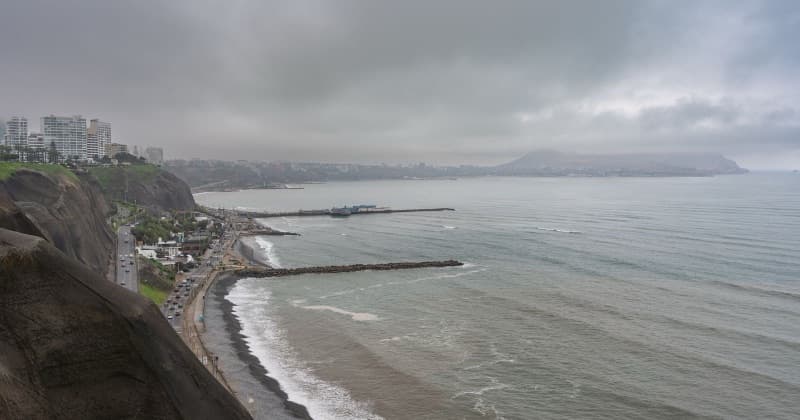
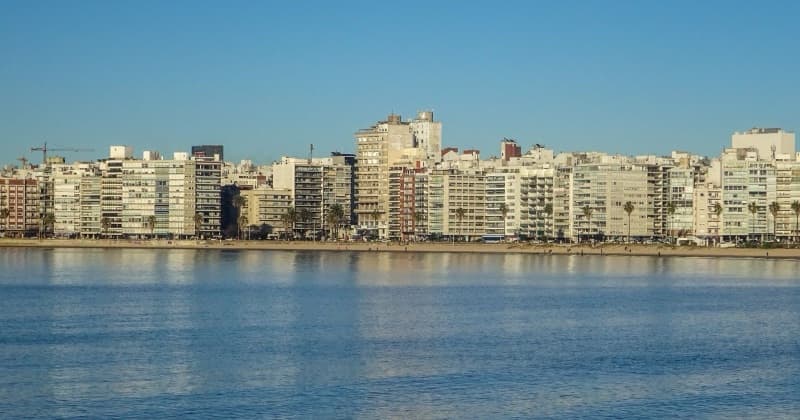
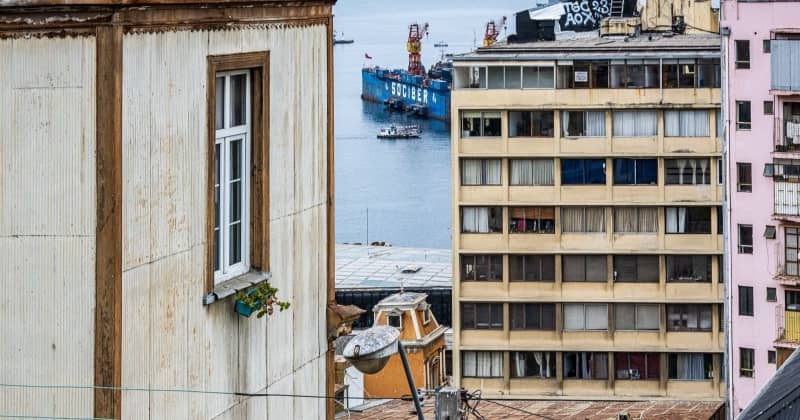
Viña del Mar and Valparaíso are an hour and a half west on the coast, cheaper than Santiago and cooler in summer. Viña is the tidy beach city. Valparaíso is the hilly, graffiti-covered, UNESCO-listed port with a bohemian streak and steeper everything, including the maintenance on older houses. Both are close enough to Santiago for specialist appointments.
La Serena is roughly 470 km north: a beach city with a colonial core, a dry, mild climate and lower costs. It's popular with Chilean retirees for good reason. Healthcare is adequate for routine needs; serious cases go to Santiago.
The Lake District (Puerto Varas, Frutillar, Pucón, Valdivia) draws people who want lakes, volcanoes and German-Chilean villages, and who don't mind rain. Puerto Varas has a small foreign community and is close to Puerto Montt's airport and hospital. The long, wet winters suit some Canadians and send others back north by year two.
Getting Residence: The Rentista and Pensionado Route
Chile rewrote its immigration law in 2021 (Ley 21.325, in force since 2022). Two things changed that matter for Canadians: temporary residence is now organized into defined subcategories, and you apply from outside Chile, online through SERMIG's portal. The old habit of arriving as a tourist and switching status in-country is closed for most categories, including this one.
Canadians get up to 90 days visa-free on arrival, with one extension of up to 90 days available online for a fee. That's reconnaissance time, not a residence strategy.
| Permit | Who it's for | Income requirement | Can you work? | Key conditions |
|---|---|---|---|---|
| Temporary residence: jubilados y rentistas | Retirees with a pension; people living off rental or investment income | No fixed figure; must cover "at least basic needs" under Ministry of Social Development parameters | Yes; temporary residents can work | Apply from abroad; issued for up to 2 years, renewable |
| Other temporary subcategories | Workers with a Chilean job offer, family of Chileans, students, investors | Varies by subcategory | Depends on subcategory | Same online, from-abroad process |
| Definitive residence | Temporary residents after (usually) 24 months | Ongoing proof of income | Yes | Lapses after 2 continuous years outside Chile |
The Income Threshold Isn't a Number
This is the catch. SERMIG doesn't publish a minimum pension. The permit page says your pension must "allow them to satisfy at least their basic needs," judged against the Ministry of Social Development's parameters. Immigration lawyers and relocation firms commonly cite USD 1,000–1,500 a month for a single applicant as a safe working level, plus something for each dependant. That's practitioner guidance, not a rule. Show more if you have it, and show it clearly.
What Counts as Income
Any regular, documented pension counts for the jubilado side: CPP, OAS, a defined-benefit employer pension or a public-sector pension. You'll need a certificate stating the amount and duration, plus proof of the latest payment. Service Canada's benefit statements and your plan administrator's letter are the usual sources.
RRIF withdrawals are the grey zone. A RRIF isn't a pension in the usual sense, and SERMIG wants a pension certificate. RRIF income fits better under the rentista side, which requires steady income from financial assets plus a certificate proving you own them and documents showing the income. Expect to document the RRIF balance and the minimum-withdrawal schedule, and put it alongside your pension income instead of relying on it alone. If your income is mostly RRIF, this is where a Chilean immigration lawyer earns their fee.
Documents
- Passport valid for at least one year from the application date.
- Criminal record certificate covering the past five years, for anyone over 18. For Canadians, that means a fingerprint-based RCMP certified criminal record check.
- Pension certificate and latest payment proof (pensionado), or asset and income documentation (rentista).
- Photo to SERMIG's specifications. Everything is uploaded as PDF.
Three procedural traps:
- Apostille. Foreign public documents must be apostilled or legalized. Canada joined the Hague Apostille Convention in January 2024, so Canadian documents are now apostilled (by Global Affairs Canada or the designated provincial authority) and no longer need consular legalization.
- The 60-day clock. SERMIG wants the criminal record certificate to be no more than 60 days old when you submit, and public documents generally within 60 days of issue. RCMP fingerprint checks plus apostille can eat most of that window. Sequence it so the RCMP certificate arrives last.
- Translation. Documents in Spanish or English don't need translation. Canadian documents in French do, by an authorized translator.
Fees and Timeline
SERMIG's current fee schedule (still the 2020 resolution) sets the temporary residence fee for Canadian nationals at USD 265, payable in pesos. Definitive residence costs a general CLP 142,726 (about $207). Processing times reported by practitioners run from roughly six months to a year. SERMIG doesn't publish a service standard, so build slack into your departure date.
From Temporary to Permanent to Citizen
Definitive residence. If you applied for your temporary permit after 14 May 2022, you can apply after 24 months of temporary residence, filing no more than 90 days before your permit expires. Absences stretch that clock, and SERMIG publishes the scale:
| Time outside Chile during temporary residence (continuous or not) | Residence required before applying |
|---|---|
| Up to 2 months | 24 months |
| More than 2, up to 6 months | 30 months |
| More than 6, up to 12 months | 36 months |
| More than 12 months | 48 months |
If you plan to spend Canadian summers at the cottage, that table is your planning document. Once granted, definitive residence is revoked automatically after more than two continuous years outside Chile. You can request a one-time two-year extension from a Chilean consulate in the final 60 days before that point.
Citizenship. You can apply for a carta de nacionalización at 18 or older if you hold definitive residence and have five years of residence counted from your first residence permit stamp. Spouses of Chileans and close relatives can apply after two years. Chile permits dual nationality, and so does Canada, so you don't have to give anything up. Whether long trips "interrupt" continuous residence is decided case by case by the ministry. There's no published day count, so keep your travel modest in the years before you apply.
The Long Game: An EU Passport
Spain's two-year citizenship route for Ibero-Americans (instead of ten) covers Chileans by birth, such as Chilean-born Canadians and children born in Chile, but not people who naturalize, so Chilean citizenship won't shortcut a Canadian to an EU passport. The mechanics are in our Spain guide.
The Canada–Chile Free Trade Agreement sometimes comes up here. It has provisions for temporary entry of business people, but it gives retirees nothing. It isn't a residence route.
Chile's Tax System
Who Is Resident, and When
Chile's test, rewritten in 2020, is simple: you are resident once you've spent more than 183 days in Chile, in total, in any 12-month window. The days don't need to be consecutive or fall in one tax year. SII guidance says residence starts from the day you cross the 184-day line. Chile's tax year is the calendar year, but residence can begin partway through it. This is not Spain's all-or-nothing calendar-year test.
There's a second hook: domicile. Chilean tax law applies to people who are either resident or domiciled, and domicile turns on your intention to stay. Someone who arrives with a residence permit, a lease and their furniture may be domiciled well before day 184. For planning purposes, assume Chile considers you a taxpayer from arrival.
The Three-Year Window for Foreign Income
Article 3 of Chile's Income Tax Law gives foreigners who establish residence or domicile in Chile a significant break: for the first three years from arrival, they're taxed only on Chilean-source income. Foreign investment income, foreign rent and anything else from outside Chile is out of scope during that window.
The law says the three years "may be extended by the Regional Director in qualified cases." The SII's published rulings say the extension must be requested before the three years run out, and that the deciding factor is the taxpayer's lack of intention to settle in Chile. A retiree with definitive residence and a Chilean pension card should plan on three years, not six. The window is for foreigners only: it doesn't apply to Chilean nationals, including Chilean-born Canadians (SII Oficio 2123 of 2018).
Rates: The Global Complementario
After that, Chilean residents pay the Impuesto Global Complementario on worldwide income. Brackets are set in UTA (an annual tax unit indexed to inflation) and work like Canada's: each rate applies only to the slice in its band. At October 2026's UTA of CLP 865,812:
| Annual taxable income (UTA) | ≈ CLP | ≈ CAD | Rate |
|---|---|---|---|
| Up to 13.5 | Up to 11.7M | Up to $16,900 | 0% |
| 13.5–30 | 11.7M–26.0M | $16,900–$37,600 | 4% |
| 30–50 | 26.0M–43.3M | $37,600–$62,700 | 8% |
| 50–70 | 43.3M–60.6M | $62,700–$87,800 | 13.5% |
| 70–90 | 60.6M–77.9M | $87,800–$112,900 | 23% |
| 90–120 | 77.9M–103.9M | $112,900–$150,600 | 30.4% |
| 120–310 | 103.9M–268.4M | $150,600–$389,000 | 35% |
| Over 310 | Over 268.4M | Over $389,000 | 40% |
The same brackets, in monthly UTM, apply to Chilean wages and pensions through the Impuesto Único de Segunda Categoría. Foreign-source income is taxed when received, not as it accrues. That matters for registered accounts, below. A Kast-government reform package moving through Congress in 2026 is mainly about corporate tax and how corporate tax is credited to shareholders. As of this update it hasn't changed the personal brackets.
There is no wealth tax in Chile. There is an annual property tax (contribuciones) on Chilean real estate, and an inheritance tax that rises to 25% at the top. Under the inheritance law, a foreigner's assets outside Chile are only included if they were bought with Chilean money. That's worth reading alongside our estate planning for expats guide.
How Chile Treats Your Canadian Income
This is where the treaty does the heavy lifting. Article 18(1) of the Canada–Chile convention: "Pensions arising in a Contracting State and paid to a resident of the other Contracting State shall be taxable only in the Contracting State in which they arise." Canadian pensions are taxable only in Canada. The treaty doesn't define "pension," and Article 19 (government service) expressly excludes pensions, so government pensions land in Article 18 as well.
Chile doesn't even need the treaty for most of this. Article 17 N°17 of its Income Tax Law says foreign-source pensions "no constituyen renta": they aren't income at all, for any resident, Chilean or foreign. The SII says there's no obligation to declare them. The catch is that the SII reads "pension" narrowly: periodic payments based on years of work, similar to a Chilean pension. A lump sum doesn't qualify.
| Income / account | Treatment in Chile | Notes |
|---|---|---|
| CPP / OAS | Not taxable: not income under LIR Art. 17 N°17, and the treaty gives Canada exclusive taxing rights | No SII ruling on OAS specifically; the SII treats Chile's own non-contributory universal pension as a pension |
| Government employment pension (federal, provincial, municipal) | Not taxable | Article 19 excludes pensions, so Article 18 applies |
| Private DB / employer pension | Not taxable | LIR Art. 17 N°17 and treaty Article 18 (periodic payments; a commuted value is a different question) |
| RRIF payments | Open, leaning taxable | No ruling on a RRIF. SII rulings on similar plans point to taxable: a US IRA is a savings plan taxed as capital income on receipt (Oficio 2803/2019), and a 401(k) transfer was taxed (1299/2024). If Chile taxes it, the Canadian 25% is creditable. Get a Chilean opinion before relying on either answer. |
| RRSP withdrawals | Open, leaning taxable | The SII says a lump sum is not a pension (Oficios 3642/2021, 1673/2022), and treats IRA-type plans as savings (2803/2019). Canada's own law calls it a pension, but that doesn't bind Chile. |
| Annuities | Life-annuity insurance payments aren't income in Chile if the contract qualifies (LIR Art. 17 N°3); Canada may tax at up to 15% of the taxable portion | Canada's cap doesn't apply if the annuity was bought with deductible money (e.g. inside an RRSP) |
| TFSA | No recognition; Chile has no equivalent | Probably not taxable while the money stays in; withdrawals of gains could be treated as foreign income after year three. No published guidance. |
| Canadian dividends / interest | Taxable after year three, with a credit for Canadian tax | Dividends: Canada withholds 15% (Art. 10). Arm's-length interest: no Canadian withholding |
One more wrinkle: under Article 23, Chile "may take into account" treaty-exempt income when setting the rate on your other income. That shouldn't reach CPP, OAS or a DB pension, which aren't income under Article 17 N°17 and don't go on a Chilean return. It could matter for anything Chile treats as exempt only because of the treaty, such as a RRIF if the pension argument wins. That's a question for a Chilean contador.
Foreign Asset Reporting: Chile's Modelo 720
Chile has one. Declaración Jurada 1929 (annual return on operations abroad) must be filed by 30 June each year by residents or domiciliaries who held investments abroad or received foreign-source income in the previous year. There is no minimum threshold in the published guidance. For investments whose income carries a foreign-tax credit, which describes most of a retiree's Canadian holdings, the penalty for filing late, not filing or filing incorrectly is 10 UTM plus 1 UTM for each month late, capped at 100 UTM (LIR Art. 41 A N°6). That's about $1,050 rising to about $10,500 at October 2026 values. Your Canadian brokerage accounts, RRSP/RRIF and TFSA are all "investments abroad" from Chile's point of view. The SII resolution that sets up DJ 1929 has no carve-out for the three-year foreign-income window, so it applies on its face; whether the SII enforces it against new arrivals is unconfirmed. File it anyway.
The Treaty from Canada's Side: Withholding
The Canada–Chile Income Tax Convention was signed in Santiago on 21 January 1998, entered into force on 28 October 1999 and applies to Canadian withholding from 1 January 2000. Chile is also on Canada's list of treaties covered by the OECD multilateral instrument.
Here's the clause that defines your budget. Many of Canada's treaties let the residence country tax pensions and cap Canada's withholding, often at 15% on periodic payments. Canada–Chile does the opposite: it gives Canada exclusive rights to tax the pension and sets no rate limit at all. The Part XIII default of 25% applies.
| Canadian-source payment to a Chilean resident | Canadian withholding |
|---|---|
| CPP, QPP, OAS | 25% |
| Employer / government pensions (periodic or lump sum) | 25% |
| RRIF payments (minimum or above) | 25% |
| RRSP withdrawals | 25% |
| Annuities (non-registered) | Up to 15% of the taxable portion |
| Portfolio dividends from Canadian companies | 15% |
| Interest (where Part XIII applies) | 10% (treaty rate since 1 January 2019, via the most-favoured-nation clause); arm's-length interest is generally exempt under Canadian law |
A Worked Example
Take a retired couple, but look at one spouse: a former Ontario teacher, now four years into living in Viña del Mar, past the three-year window. In CAD:
| Income | Annual amount | Canadian withholding | Chilean tax |
|---|---|---|---|
| CPP | $12,000 | $3,000 (25%) | $0, treaty Art. 18 |
| OAS (full, ages 65–74) | $9,150 | $2,287.50 (25%) | $0, treaty Art. 18 |
| DB pension (teachers' plan) | $30,000 | $7,500 (25%) | $0, treaty Art. 18 |
| RRIF minimum | $25,000 | $6,250 (25%) | Open (see table above); any Chilean tax would likely be covered by a credit for the Canadian 25% |
| Canadian dividends (non-registered) | $10,000 | $1,500 (15%) | Likely $0 |
| Total | $86,150 | $20,537.50 | ~$0 |
The $10,000 in dividends is about CLP 6.9 million, well under the 13.5 UTA zero-rate band. On its own it attracts no Chilean tax, and the Canadian 15% couldn't be credited against anything anyway. The pensions don't count toward the rate, since they aren't Chilean income. If Chile treats the RRIF as taxable, though, RRIF plus dividends would cross into the 4% band and you'd have a Chilean return to file, with the Canadian tax credited against it. That's the open question flagged above.
So the effective rate is roughly 24% of gross, nearly all of it Canadian, with no Chilean filing burden on the pensions themselves. That beats a lot of destinations. It's still not the 15% that Canadians in many treaty countries pay.
The escape hatch is a section 217 election. Instead of letting the 25% stand as final, a non-resident can file a Canadian return electing to pay regular Part I tax on CPP, OAS, pension, RRIF and RRSP income. If nearly all your world income is Canadian, as it is here, you get Canada's personal credits, and the result is often well below 25% at moderate incomes. You can apply in advance (Form NR5) to have the withholding itself reduced. The section 217 rules have their own traps, so model it before you file. And don't forget the OAS Return of Income: non-residents file it every year or the payments stop, and the OAS recovery tax still applies above the income threshold.
One technical point for your adviser. The treaty's definition of "resident" excludes people who are taxed only on local-source income, which describes a new arrival during the three-year window. It's arguable that you aren't a Chilean resident for treaty purposes until year four. The pension withholding is 25% either way. But the 15% dividend rate depends on treaty residence, and so do the NR301 you give your Canadian broker and the tie-breaker rule if the CRA ever questions whether you've left.
Social Security: Canada and Chile Have an Agreement
The Canada–Chile Agreement on Social Security has been in force since 1 June 1998. CPP and OAS are payable to you in Chile regardless, so the agreement isn't about portability. It's about qualifying.
For OAS, the rule that bites expats is this: to keep receiving OAS while living abroad beyond six months, you need 20 years of Canadian residence after age 18. Without it, OAS stops after you've been gone six months. Under the agreement, Canada counts "periods credited under the pension program of Chile after the age of 18" as Canadian residence. The fine print is that it counts Chilean pension contribution periods, not just time spent living in Chile. A retiree who lives in Chile on CPP and a pension, and never pays into a Chilean AFP, gets no help from the agreement towards the 20 years. Someone who works in Chile and contributes does. Check where you stand with the expat OAS eligibility calculator before you set a departure date. If you're at 17 or 18 years of Canadian residence, staying a little longer can be worth a lot.
For CPP, the agreement lets you combine contribution periods from both countries to meet minimum-contribution rules for disability and survivor benefits. A calendar year with at least three months of Chilean contributions counts as a CPP contribution year for eligibility. It also covers the health-plan enrolment right mentioned above, and Canadians posted temporarily to Chile by a Canadian employer can stay on CPP for up to 60 months instead of paying into both systems.
Life on the Ground
Language. You'll need Spanish, and Chilean Spanish is famously fast, clipped and full of local slang (cachai?). English is common among professionals in Las Condes and Providencia, and in private clinics. Elsewhere it isn't. Bureaucracy, leases and FONASA all run in Spanish. Budget for lessons before you go, not after.
Banking. The key is your cédula de identidad for foreigners, which you get once residence is approved. With it, you can open a CuentaRUT at BancoEstado, a basic account with a debit card and no income requirement. Full chequing accounts (cuenta corriente) at most banks expect definitive residence or a Chilean employment history. Plan on living from your Canadian accounts for the first months. Wires from a Canadian bank arrive by SWIFT and carry outgoing fees, sometimes intermediary deductions, and an exchange spread that's usually the biggest cost. Compare it against money-transfer services that pay out in pesos. Keep a Canadian account open for CPP, OAS and pension deposits; that on its own is a minor tie, not a residential one.
Flights home. Air Canada flies nonstop between Toronto and Santiago and added a seasonal Montréal route in the 2025–26 southern summer. From Vancouver or Calgary you'll connect, usually via Toronto, a US hub, Lima or Bogotá. Santiago is a long way from Canada; plan on a full travel day each way and a fare that makes visits deliberate, not casual.
Safety, stated fairly. Global Affairs Canada rates Chile "Exercise a high degree of caution" because of demonstrations, civil unrest and crime. Some context:
- 2019 unrest. The estallido social that began on 18 October 2019 brought mass protests and serious damage in Santiago. It led to two constitutional rewrites, both rejected by voters in 2022 and 2023. Demonstrations still cluster around 11 September and 18 October, and around central Santiago, Valparaíso and Concepción.
- Crime. Petty theft is common in the big cities. The advisory also notes a rise in armed robberies, carjackings and express kidnappings. Public security was the central issue of the 2025 election, which José Antonio Kast won.
- Araucanía and Biobío. Parts of these southern regions are under a long-running state of emergency because of politically motivated violence.
For most Canadians in Providencia, Viña or Puerto Varas, daily life feels orderly. Use the same street sense you'd use downtown in a big North American city, and check the advisory before you commit to a specific area.
The Canadian Side Most People Overlook
Chile's side of the ledger is mostly favourable. Canada's is where the money is made or lost. We've covered each of these in depth elsewhere, so here's the short version.
Departure tax. Leaving Canada triggers a deemed disposition of most non-registered assets at fair market value, and Canada taxes the accrued gain. Canadian real estate, including your home, and registered accounts are excluded; Canadian property is taxed only when you actually sell it. There's a Chile-specific upside in Article 13(4) of the treaty. If Canada taxes you on a deemed disposition when you emigrate, you can elect for Chile to treat you as having bought those assets at fair market value on arrival. That stops Chile from taxing the same pre-move gain a second time when you eventually sell. The same paragraph rules it out for property situated in Canada or Chile, so ask your adviser which of your holdings it actually covers before you count on it.
Leaving Canada? Let's get it right the first time.
The free tools get you most of the way. For the irreversible decisions, book a 45-minute call and we'll walk through your situation.
Ongoing Canadian-source income. Pensions and RRIF payments are covered above: 25%, with section 217 as the relief valve. Canadian rental income is withheld at 25% of gross rent unless you file under section 216 and an NR6 to be taxed on net income. The treaty gives Canada first claim on Canadian real estate income.
Registered accounts. You can keep your RRSP, RRIF and TFSA after you leave. You can't make new TFSA contributions as a non-resident without a 1%-per-month penalty. Any outstanding Home Buyers' Plan or Lifelong Learning Plan balance must be repaid on schedule around your departure. RRSP or RRIF withdrawals meet the 25% withholding regardless of size. And Chile's DJ 1929 will want to know the accounts exist.
Residency ties. A Chilean cédula doesn't make you a Canadian non-resident. A home kept available in Canada, or a spouse who stays behind, can keep you resident. Read the ten mistakes Canadians make leaving, and sort out your driver's licence, passport and PR card before you go.
Planning Your Departure Properly
Asset review comes first, months before the move: which holdings carry large gains, whether losses can offset them, and whether selling before departure beats a deemed disposition. Chile's Article 13(4) step-up changes that calculation.
Residency severance comes next. Cut your ties so your departure date is defensible, and pick that date deliberately: it anchors your final Canadian return and starts Chile's three-year window.
Chilean tax planning before arrival matters because of that window. Foreign investment income and gains in years one to three are outside Chile's net, so consider whether rebalancing or larger RRSP withdrawals belong there. They still meet Canadian withholding, but Chile can't add its share.
Coordination ties it together: the treaty decides who taxes what, section 217 decides how much Canada keeps, and DJ 1929 decides whether Chile hears about it from you or from someone else.
Run Your Own Numbers First
Cross-border tax specialists charge hundreds of dollars an hour, and departure planning often takes several consultations. Expatify is built for Canadians who want to understand their numbers before they start writing those cheques. Every calculator below is free, with no sign-up.
| Free tool | What it does |
|---|---|
| Departure tax calculator | Estimates your deemed-disposition liability based on your actual assets |
| Expat income tax calculator | Models your Canadian tax after you leave. Chile isn't in it yet, so it won't apply the Canada–Chile treaty for you. |
| Non-resident withholding calculator | Shows the Canadian-side withholding on pensions, RRIF payments, dividends and rent. Use the 25% default for Chilean pensions. |
| Expat OAS eligibility calculator | Checks whether your Canadian residence years meet the 20-year rule for OAS abroad |
| Tax residency checker | Walks through the residential ties the CRA weighs when deciding whether you've actually left |
| Leaving-Canada checklist | Organizes the whole process by timeline, from twelve months out through post-departure, so nothing slips |
If you'd rather talk it through, you can also book a one-on-one call.
Making the Decision
Chile suits a particular kind of Canadian: someone who wants Latin America without the infrastructure lottery, can live with earthquakes and Spanish, and doesn't need a big expat scene. The residence process is orderly, citizenship is five years away, the public health system is open to you as a pensioner, and Chile leaves your Canadian pension alone.
The trade-offs are just as specific. Canada's 25% withholding on that pension doesn't drop to a treaty rate, so section 217 planning isn't optional. The three-year window is generous, then it closes. And the social security agreement only helps with OAS if you contribute in Chile. None of these are deal-breakers. All of them are cheaper to handle before you leave than after.
If you're weighing Chile against other Latin American options, our guides to Mexico, Colombia, Costa Rica and Panama make the comparison concrete. Whichever way you lean, the numbers on the Canadian side come first. The complete leaving-Canada checklist puts them in order.
Ready to understand what leaving Canada would cost you? Start with the departure tax calculator and get a clear picture of your obligations before you make any decisions.
Related Resources:
- CRA: Leaving Canada (Emigrants)
- Canada–Chile Income Tax Convention (full text)
- Canada's tax treaties in force (Department of Finance)
- Canada–Chile Agreement on Social Security (Service Canada)
- SERMIG: Temporary residence for retirees and rentistas
- SERMIG: Definitive residence
- Servicio de Impuestos Internos (SII)
- Global Affairs Canada: Chile travel advice
Free Tools & Calculators:
- Canadian Departure Tax Calculator
- Expat Income Tax Calculator
- Non-Resident Withholding Tax Calculator
- Expat OAS Eligibility Calculator
- Tax Residency Checker
- Leaving-Canada Checklist
This content is for educational purposes and reflects information current as of October 2026. Tax rates, visa requirements, and government programs change — verify details with the relevant authorities before acting. Individual circumstances vary, and cross-border tax situations benefit from professional guidance.