Panama has quietly become one of the world's premier expat destinations—and with good reason. For two consecutive years, InterNations has ranked Panama the best country for expatriates globally, with 94% of expats reporting satisfaction with their lives there. The combination is genuinely compelling: a territorial tax system that doesn't touch foreign income, the world's most generous retiree visa program, use of the US dollar eliminating currency risk, modern infrastructure rivalling developed nations, and costs that stretch Canadian retirement savings dramatically further.
For Canadians specifically, Panama offers something increasingly rare: a genuine reset. An estimated 20,000 to 30,000 North Americans now call Panama home, with Canadians consistently ranking among the top three nationalities seeking residency. The reasons are straightforward—escaping brutal winters, stretching fixed pensions, accessing quality healthcare at a fraction of Canadian costs, and embracing a lifestyle that prioritizes living over accumulating.
But Panama's advantages come with the same Canadian departure complexities that apply regardless of destination. The territorial tax system means Panama won't tax your Canadian pension or investment income—but Canada's departure tax applies before you ever board the plane. Understanding both sides of this equation is essential to making Panama work financially.
Why Panama Ranks #1 for Expats
Panama's appeal rests on a foundation of practical advantages that compound into something greater than their individual parts.
The US dollar serves as Panama's official currency alongside the Panamanian balboa (pegged 1:1 to the dollar). For Canadians, this eliminates the currency instability common in other Latin American destinations. Your pension arrives in CAD, you convert to USD, and that's the only exchange you'll manage. No worrying about local currency devaluations eating into your purchasing power. No need to time transfers around volatile exchange rates. The dollarized economy also means familiar pricing transparency and easy mental math for North Americans.
Infrastructure distinguishes Panama from regional neighbours. The country boasts Central America's only metro system (in Panama City), highways that rival North American standards, reliable electricity and water, high-speed internet reaching even mountain communities via Starlink, and telecommunications networks that work. The famous Panama Canal isn't just a tourist attraction—it's generated the wealth that built genuine First World infrastructure in a developing nation. Expats arriving from other Latin American countries consistently note the difference in daily convenience.
Climate variety within Panama's compact territory means you can choose your weather. Panama City and the Pacific beaches deliver tropical heat year-round (28-32°C). The mountain communities of Boquete and El Valle de Antón, at 1,000-1,500 metres elevation, enjoy spring-like conditions (15-25°C) without ever needing heating or air conditioning. The Caribbean coast offers a different character entirely. Unlike countries where you're locked into one climate, Panama lets you pick—and relocate easily if your preference changes.
Safety and stability exceed regional norms. Panama abolished its military in 1990, redirecting those resources elsewhere. The country maintains strong rule of law, a functioning court system, and political stability unusual for Latin America. The US State Department rates Panama at Level 2 (Exercise Increased Caution)—the same level as much of Western Europe. Petty crime exists, particularly in Panama City, but violent crime rates remain far below most Latin American nations.
Proximity to Canada matters more than many initially realize. Direct flights from Toronto reach Panama City in under six hours. Panama is on Eastern Standard Time all year—the same clock as Toronto and Montreal in winter, one hour behind during Canadian daylight saving time—so there's no jet lag and calls with Canadian family, financial institutions, and professionals are easy to schedule. When you need to return for family events or business, Panama is genuinely accessible rather than a 20-hour journey.
The Cost of Living Advantage
Panama's cost of living creates the financial foundation for most Canadian relocations. The numbers are genuinely compelling when compared to major Canadian cities—Forbes reports living costs are 36% lower than the United States, with rent approximately 50% less.
Housing costs vary dramatically by location and expectation. In Panama City, modern apartments in desirable neighbourhoods like Punta Pacifica or Costa del Este rent for $1,200 to $2,000 monthly—comparable to mid-sized Canadian cities but with ocean views and building amenities. Move to the interior—Boquete, Coronado, El Valle—and comfortable two-bedroom homes rent for $700 to $1,200 monthly. Smaller towns like Chiriquí, Penonomé, or Las Tablas offer decent housing starting at $400 to $600 monthly. Real estate purchases follow similar patterns; foreigners have full property rights identical to Panamanians, and many Canadians find they can purchase outright what they couldn't afford to rent in Vancouver or Toronto.
Food costs reward those who adapt to local eating. Traditional Panamanian meals at local fondas (casual restaurants) run $5 to $10. Groceries for local produce, fish, poultry, and staples cost $200 to $350 monthly for a single person. The catch: imported goods carry significant markups. Canadian favourites, specialty items, and familiar brands can cost double or triple what you'd pay at home. Expats who insist on maintaining North American eating habits find their food budgets rising accordingly—those who embrace local cuisine save substantially.
Healthcare costs represent one of Panama's strongest draws. A specialist consultation at a private hospital runs $30 to $75. Dental cleanings cost $20 to $50; implants run $600 to $1,000. Comprehensive blood panels that might cost $1,000+ in the US run $40 to $80. Private health insurance for expats typically costs $100 to $200 monthly, depending on age and coverage level—far below Canadian or American equivalents.
Overall budgets depend heavily on lifestyle choices. Realistic monthly ranges for comfortable living: $1,500 to $2,000 for a single person in smaller towns, $2,000 to $3,000 for couples, $3,000 to $5,000 for those preferring Panama City's urban amenities. These figures include housing, food, healthcare, transportation, and entertainment. Expats report living on less, but $1,500 represents a reasonable baseline for comfortable rather than subsistence living.
Where Canadians Are Settling
Panama's geography offers distinct lifestyle options, and Canadian expats have distributed themselves accordingly.
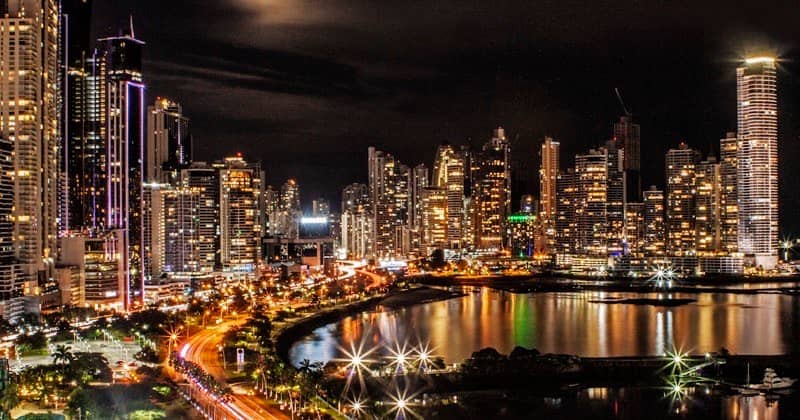
Panama City attracts those seeking urban amenities, professional opportunities, and the conveniences of a modern capital. The skyline rivals Hong Kong; shopping malls, international restaurants, and cultural events abound. Healthcare infrastructure concentrates here, with hospitals like Paitilla Medical Center and Hospital Nacional offering care comparable to North American standards. The trade-off: Panama City costs more than the interior, traffic can be frustrating, and the tropical heat is inescapable without air conditioning (which significantly increases electricity bills, often $200-$300 monthly).
Boquete has become synonymous with expat retirement in Panama. This mountain town in Chiriquí Province, at 1,200 metres elevation, offers spring-like weather year-round—highs of 25°C, lows of 15°C—eliminating both heating and air conditioning costs. The surrounding landscape features cloud forests, coffee plantations, and the dramatic Volcán Barú. A substantial English-speaking expat community has developed over decades, meaning newcomers find established social networks, familiar services, and easy integration. Healthcare access is more limited than Panama City, though the provincial capital David (30 minutes away) offers private hospitals, and serious cases can reach Panama City within an hour by flight.
Coronado and the Pacific Beaches attract those prioritizing ocean access. Located 90 minutes from Panama City along the Pacific coast, this area offers beach lifestyle with reasonable proximity to the capital's infrastructure. Golf courses, beach clubs, and gated communities cater to the expat market. Costs run higher than mountain communities but lower than Panama City proper.
El Valle de Antón sits in an extinct volcanic crater, offering cooler temperatures similar to Boquete but closer to Panama City (two hours). The town attracts both tourists and long-term expats, with a weekend market showcasing local crafts and produce. It's smaller and quieter than Boquete, appealing to those seeking mountain climate without the established expat infrastructure.
David serves as Panama's second-largest city and the capital of Chiriquí Province. It offers urban conveniences—hospitals, shopping, services—at interior prices. Many Boquete residents use David for practical needs while maintaining their mountain homes. The city itself is hot (low elevation) but provides a practical base for those who want easy access to both mountains and beaches.
Emerging areas like Pedasi on the Azuero Peninsula, Bocas del Toro on the Caribbean, and smaller Central Valley towns attract expats seeking lower costs and less-developed communities. These areas suit those comfortable with limited English-language services and more authentic integration into Panamanian life.
Panama's Pensionado Visa: The World's Best Retirement Program
Panama's Pensionado (retiree) visa program is widely considered the most generous in the world, and understanding its requirements is essential for Canadian retirees considering the move.
Basic requirements are remarkably accessible. You need a guaranteed lifetime pension income of at least $1,000 USD monthly. CPP, OAS, employer pensions, government retirement benefits, and permanent annuities all qualify. The pension must be "for life"—if your documentation doesn't explicitly state this, you'll need an affidavit confirming the permanent nature of the payments.
Reduced threshold applies if you purchase Panamanian real estate worth at least $100,000 USD—the income requirement drops to $750 USD monthly. For Canadians receiving combined CPP and OAS who also plan to purchase property, this makes the threshold easily achievable.
Dependent inclusion allows your spouse and children under 18 (or under 25 if studying) to be included in your application. Each dependent increases the income requirement by $250 USD monthly. Joint pension income between spouses is permitted—you can combine both incomes to meet the threshold.
Immediate permanent residency distinguishes Panama's program from most alternatives. Unlike Costa Rica or Mexico where initial residency is temporary, the Pensionado visa grants permanent resident status from day one. This provides security and eliminates the renewal uncertainty that plagues other programs.
Minimal presence requirements add flexibility. Pensionado visa holders need only visit Panama once every two years to maintain their permanent residency. This suits snowbirds who spend summers in Canada or those with family obligations requiring extended absences. Naturalization is a separate, harder step: Panama's Constitution (art. 10) requires five consecutive years of residence, proof of Spanish and basic knowledge of Panamanian geography, history and government, and an express renunciation of your other nationality.
The Pensionado discount system provides tangible daily benefits unavailable in most countries. Panama's Ley 6 of 1987, amended several times since, grants discounts to retirees and pensioners, including resident foreigners, on categories such as:
- Entertainment (movies, theatres, concerts, sporting events)
- Restaurants
- Hotels
- Airline tickets and domestic transport
- Medical consultations, hospital services and prescription medications
- Dental and eye care
The percentages differ by category and the law has been amended more than once, so check the current list with ACODECO, Panama's consumer protection authority, before you count on a specific figure. These discounts are legally mandated and widely honoured throughout Panama, providing real savings on daily expenses that compound over years of residence.
Documentation requirements include apostilled birth certificates, marriage certificates (if applicable), police clearance from any country you've lived in during the past five years, health certificate from a Panamanian doctor, pension verification letters explicitly stating "lifetime" or "for life" payments, and passport copies. All documents must be translated into Spanish by a certified translator. The process typically takes three to six months, requires physical presence in Panama for registration and biometrics, and must be submitted through a Panamanian immigration attorney.
Panama's Territorial Tax System
Panama's territorial tax system represents one of its most significant advantages—and one that differentiates it from most other destinations Canadians consider.
Territorial taxation means Panama only taxes income earned within its borders. Your Canadian pension? Not taxable in Panama. CPP and OAS? Not taxable in Panama. Investment returns from Canadian or American markets? Not taxable in Panama. Rental income from Canadian property? Not taxable in Panama. Remote work income from Canadian or foreign employers? Generally not taxable in Panama (provided services aren't delivered to Panamanian clients).
This is fundamentally different from worldwide taxation systems like Canada's, Spain's, or most European countries'. For Canadian retirees living primarily on pensions and investment returns—income that originates entirely outside Panama—the territorial system means effectively zero Panamanian income tax.
Panamanian-source income does face taxation if you generate it. Working for a Panamanian employer, operating a Panamanian business, or earning rental income from Panamanian property triggers tax obligations. Rates are progressive: the first $11,000 USD annually is tax-free, then 15% up to $50,000, then 25% above that. But most Canadian retirees living on foreign income fall entirely outside the Panamanian tax system.
No tax treaty exists between Canada and Panama. Unlike Spain or Mexico, there's no formal agreement coordinating taxation between the two countries. In practice, this matters less than you might expect because Panama's territorial system simply doesn't claim taxing rights over foreign-source income. The lack of treaty becomes more relevant for any Panamanian-source income, where theoretical double taxation could occur without treaty-based relief mechanisms.
No wealth tax, no inheritance tax, no gift tax applies in Panama. Property tax depends on the property's value and whether it's your primary residence; check current rates with Panama's Dirección General de Ingresos. Capital gains on real estate face a 10% rate. VAT (called ITBMS) is 7%—among the lowest in the region.
Tax residency in Panama typically requires spending 183 days or more in the country annually, or establishing your centre of vital interests there. However, because Panama doesn't tax foreign income regardless of residency status, the distinction matters less than in worldwide taxation countries. What matters is establishing Panamanian residency for visa purposes—tax residency follows naturally if you're actually living there.
The Financial Considerations Most Canadians Overlook
Panama's territorial tax system is genuinely attractive—but it doesn't eliminate your Canadian tax obligations or the complexities of leaving Canada properly.
Canada's departure tax applies regardless of your destination's tax system. When you cease to be a Canadian tax resident, the CRA treats you as having sold certain property at fair market value—triggering capital gains tax on any appreciation accumulated during your Canadian residency. This "deemed disposition" affects non-registered investments, shares in private corporations, real estate outside Canada, and other capital assets. Canadian real estate is excluded (ITA 128.1(4)(b)(i))—it stays taxable in Canada when you eventually sell. The fact that Panama won't tax your foreign income doesn't reduce what you owe Canada on the way out.
Leaving Canada? Let's get it right the first time.
The free tools get you most of the way. For the irreversible decisions, book a 45-minute call and we'll walk through your situation.
Ongoing Canadian obligations persist after departure. With no tax treaty between Canada and Panama, Canada's default 25% withholding applies to Canadian rental income (on the gross rent), pensions, CPP, OAS, RRSP and RRIF withdrawals, and dividends. Arm's-length interest is exempt from withholding. No treaty doesn't mean no relief: a section 217 return, open to every non-resident, can lower the tax on pensions and benefits when your income is modest, and section 216 lets you pay tax on net rather than gross rent.
OAS has its own rules. OAS is paid outside Canada only if you lived in Canada for at least 20 years after age 18, and Canada has no social security agreement with Panama to help you get there. Because the non-resident tax on Canadian pensions in Panama is 25%, the OAS recovery tax also applies once your net world income passes the threshold ($93,454 for 2025).
Registered accounts require careful handling. You can maintain RRSPs after leaving Canada, but withdrawals face non-resident withholding tax. TFSA contributions while non-resident trigger penalties. Home Buyers' Plan and Lifelong Learning Plan balances become due. The rules around these accounts during transition require attention before departure.
Section 216 and 217 returns can reduce your Canadian tax on rental income and on pensions and benefits respectively—but claiming them requires understanding which provisions apply to your specific situation.
Currency considerations add practical complexity. Your Canadian pension arrives in CAD, most Panamanian transactions occur in USD, and exchange rate fluctuations affect your purchasing power. Many expats maintain accounts in both currencies and time their conversions strategically. Services like Wise or OFX can significantly reduce transfer costs compared to traditional bank wires.
Healthcare in Panama
Panama's healthcare system offers genuine quality at costs dramatically below Canadian equivalents—but understanding how it works helps set appropriate expectations.
Private healthcare represents the primary option for most expats. Panama City hosts several hospitals meeting international standards: Paitilla Medical Center (affiliated with Cleveland Clinic), Hospital Nacional, The Panama Clinic (recently TEMOS-accredited), and Pacifica Salud (Johns Hopkins affiliated). Many doctors trained in the US, Canada, or Europe and speak fluent English. Quality matches or exceeds what you'd find in Canadian urban centres, with shorter wait times and more personalized care.
Costs without insurance remain far below North American equivalents. General practitioner visits run $12 to $30; specialists $30 to $75. Comprehensive blood panels cost $40 to $80. Dental cleanings run $20 to $50; implants $600 to $1,000. A doctor visit that might cost $300 in the US costs $50 in Panama.
Private health insurance for expats typically runs $100 to $300 monthly depending on age, coverage level, and deductible choices. Many expats opt for high-deductible plans ($5,000 to $10,000) covering catastrophic events while paying routine care out of pocket. Local insurers like Family Medical offer coverage even for those over 70 with pre-existing conditions—unusual in this market.
Public healthcare exists through two systems: MINSA (Ministry of Health) clinics available to all, and CSS (Caja de Seguro Social) for those who contribute through employment. MINSA clinics charge nominal fees ($2-$5 for consultations) and serve as a safety net, but offer basic facilities and long waits. CSS provides comprehensive coverage for contributors but is generally unavailable to retired expats without employment income. Most expats use private facilities for all but emergency situations.
The Pensionado discount applies to healthcare too: medical consultations, hospital services and prescription medications are all discounted under Ley 6 of 1987. These legally mandated discounts compound the already-affordable private healthcare costs.
Healthcare outside Panama City varies. David offers decent private hospitals serving the Chiriquí Province (including Boquete expats). Smaller communities have clinics for routine care but serious conditions require travel. Many expats maintain international insurance that covers medical evacuation for catastrophic situations.
Planning Your Departure Properly
The combination of Canada's departure tax requirements and Panama's residency process means proper planning requires attention to both sides of the equation.
Timing matters for tax purposes. Your departure date affects which tax year captures your deemed disposition, how much Canadian-source income you'll receive while still resident, and various deadline calculations. Rushing departure can cost thousands in unnecessary taxes.
Asset review should begin well before departure. Understanding which assets trigger deemed disposition, whether opportunities exist to offset gains with losses, and whether restructuring might reduce your burden—all require analysis best done months in advance.
Residency severance from Canada involves more than changing addresses. The CRA examines residential ties (property, family), social ties (memberships, registrations), and economic ties (bank accounts, business interests) in determining whether you've genuinely become non-resident. Maintaining too many Canadian connections can result in continued Canadian tax residency.
Panama documentation takes time. Birth certificates, marriage certificates, and police clearances must be obtained, apostilled, translated, and submitted with your application. The residency process typically takes three to six months, requires physical presence for several steps, and must be handled through a Panamanian immigration attorney.
Healthcare bridging requires planning. You'll need coverage during the transition period before establishing Panamanian insurance arrangements. Travel insurance or international health policies bridge this gap.
Making the Decision
Panama offers Canadians something genuinely compelling: world-class infrastructure, quality healthcare, dramatic cost savings, the world's best retirement visa program, and a territorial tax system that won't touch your foreign income. The InterNations ranking isn't marketing—it reflects the experiences of thousands of expats who've found something that works.
But the move requires more than enthusiasm. Canada's departure tax doesn't care about Panama's territorial system—you'll settle with the CRA regardless. The Pensionado application demands patience and documentation. The adjustment to different culture, language, and pace requires genuine adaptation. And Panama isn't cheap if you insist on living exactly as you did in Canada.
The Canadians who thrive in Panama are those who approached the transition thoughtfully—understanding their obligations on both sides, planning accordingly, and avoiding surprises that derail less-prepared expats. The "cero estrés" (zero stress) lifestyle Panama promises is easier to embrace when your financial house is in order.
Whether you're seriously planning a move, casually exploring possibilities, or simply curious about what leaving Canada would involve, understanding your departure tax obligations is where the journey properly begins. The numbers might confirm that Panama makes financial sense—or they might reveal that adjustments to your timeline or asset structure would serve you better.
Either way, you'll be making decisions based on reality rather than assumptions. That clarity is worth having before you trade Canadian winters for tropical sunshine.
Ready to understand what leaving Canada would cost you? Start with our departure tax calculator and get a clear picture of your obligations before you make any decisions.
Related Resources:
- CRA: Leaving Canada (Emigrants)
- Government of Canada: Panama Travel Advisory
- Embassy of Panama: Pensionado Visa Information
This article provides general information only and does not constitute legal, tax, or financial advice. Individual circumstances vary, and readers should consult qualified professionals for guidance specific to their situations.