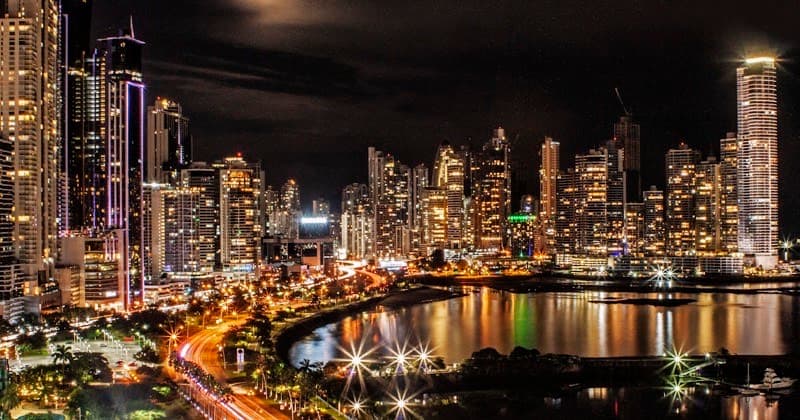
For two decades, Thailand was the default Southeast Asian retirement destination. Cheap living, warm weather, welcoming culture — the pitch sold itself. But the ground has shifted. Thailand started taxing remitted foreign income in January 2024, closing the loophole that let retirees bring pension money in tax-free. Costs in Bangkok and Chiang Mai have risen steadily. And the language barrier — which is permanent and significant — means every medical appointment, legal matter, and government interaction requires a translator or a lot of pointing.
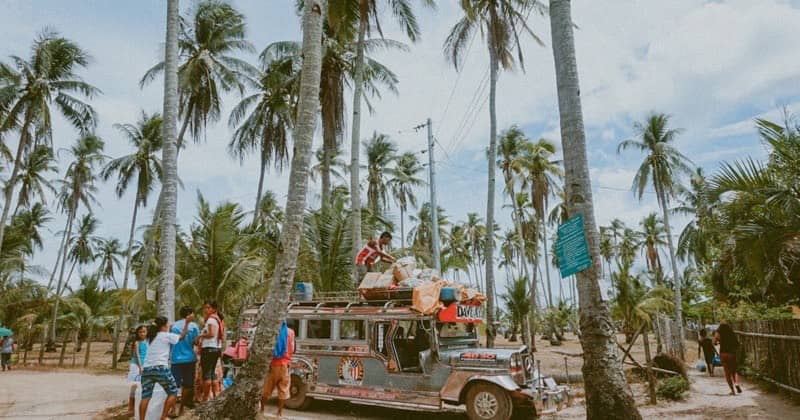
The Philippines is quietly becoming what Thailand used to be: genuinely affordable, with a tax system that doesn't touch foreign pensions, a residency program built around a refundable deposit rather than endless visa renewals, and one thing Thailand never offered — English as an official language. Nearly a million Filipinos live in Canada, creating cultural familiarity that flows both ways. A couple can live comfortably on $2,000 a month. And unlike Thailand's recent regulatory shifts, the Philippine rules for foreign retirees have been stable and straightforward for decades.
It's not paradise without asterisks. Infrastructure can be inconsistent. Healthcare quality drops sharply outside Manila and Cebu. Manila traffic is among the worst on earth — a 12-kilometre commute that takes 90 minutes is a normal Tuesday. Typhoons are a seasonal fact of life. But if you're a Canadian retiree weighing Southeast Asia and you haven't looked at the Philippines recently, you're comparing today's Thailand against yesterday's assumptions.
The bigger challenge isn't the Philippine side — it's the Canadian side. How you handle your exit from Canada determines whether this move actually saves you money or just rearranges where the problems live. Your CPP and OAS portability, your investment accounts, your RRSP withdrawal strategy, what happens to your will, whether your kids can access Canadian education — these are the decisions that matter most, and most expat guides barely mention them.
What Canadian expats need to know upfront:
- The SRRV (Special Resident Retiree's Visa) grants permanent residency for a refundable deposit of US$15,000–$50,000 depending on age and pension status — no property purchase required
- The Philippines taxes foreigners only on Philippine-sourced income, meaning your Canadian pension, RRIF withdrawals, and investment income face zero Philippine tax
- A new Digital Nomad Visa launched in mid-2025, giving remote workers legal status for up to two years while earning from foreign sources tax-free
- Cost of living runs $1,000–$2,500 CAD monthly for a comfortable lifestyle — roughly 50–70% less than major Canadian cities
- Over 957,000 people reported being Filipino in the 2021 Census of Population, and the Philippines was the second-largest source of recent immigrants to Canada between 2016 and 2021, creating deep cultural ties in both directions
- The Canada-Philippines Tax Treaty provides clear rules for pension taxation, though Canada retains withholding rights on Canadian-sourced pensions
Why Canadians Choose the Philippines
The Philippine Retirement Authority reports approximately 60,000 active SRRV holders globally as of mid-2025. The reasons tend to cluster around a few themes that genuinely set the Philippines apart from the usual Southeast Asian suspects.
English as an Official Language
This is the single biggest practical advantage over Thailand, Vietnam, or Indonesia. English is an official language alongside Filipino, and most Filipinos — particularly in urban areas and service industries — speak it fluently. You can communicate directly with your doctor, your lawyer, your bank, and the person at the Bureau of Immigration without an interpreter. If you've spent any time navigating a foreign healthcare system through a translation app, you understand what this is worth.
The Canadian Connection
The Filipino-Canadian relationship runs deeper than most people realise. The Philippines was the second most frequently reported birthplace among recent immigrants to Canada in the 2021 Census, with over 151,000 Filipinos arriving between 2016 and 2021 alone. That creates powerful two-way connections: many Canadian retirees have Filipino family members through marriage, there's widespread familiarity with Canadian culture and institutions, and the remittance infrastructure between the two countries is mature and competitive.
For Filipino-Canadians considering a return, the SRRV Courtesy program offers dramatically reduced deposit requirements — as low as US$1,500 — for former Filipino citizens.
Genuine Affordability
Unlike Thailand or Malaysia, where expat costs have risen substantially over the past decade, the Philippines remains one of Asia's most affordable destinations. A modern one-bedroom condo outside Manila rents for $350–$800 CAD monthly. Local meals run $2–5 CAD. A GP visit costs $15–30 CAD out of pocket. Domestic help — a housekeeper — is available for $150–250 CAD monthly. A couple can live comfortably on $2,000–$3,000 CAD in most areas outside Metro Manila, and frugal retirees in provincial areas can manage on considerably less.
That's not "budget travel" money. That's "I own my time and my routine" money.
The SRRV: Permanent Residency Through a Refundable Deposit
The Special Resident Retiree's Visa is the primary long-term residency pathway for foreign retirees. Unlike most retirement visas globally — which require ongoing income proof, property purchases, or periodic renewals — the SRRV asks for a refundable bank deposit and gives you indefinite residency in return.
What Changed in September 2025
The Philippine Retirement Authority overhauled the SRRV program effective September 1, 2025, consolidating several older categories into two: SRRV Classic and SRRV Courtesy. The minimum age dropped from 50 to 40, opening the door to mid-career professionals, and deposit tiers were restructured around age and pension status.
Here's how the deposits break down:
SRRV Classic (Age 50+)
| Pension Status | Deposit Required |
|---|---|
| With qualifying pension (US$800+/month) | US$15,000 |
| Without qualifying pension | US$30,000 |
SRRV Classic (Age 40–49)
| Pension Status | Deposit Required |
|---|---|
| With qualifying pension (US$800+/month) | US$25,000 |
| Without qualifying pension | US$50,000 |
SRRV Courtesy (Former Filipino Citizens)
| Age | Deposit Required |
|---|---|
| 50+ | US$1,500 |
| 40–49 | US$3,000 |
A qualifying pension means a lifetime monthly benefit — CPP alone won't cut it for most people at US$800/month, but CPP plus OAS or an employer pension typically will. The PRA is particular about this: they want to see guaranteed-for-life income, not drawdown or defined-contribution payments. If your retirement income doesn't qualify as a lifetime pension, you're looking at the higher non-pension deposit instead.
Why the SRRV Is Unusually Good
The feature list reads almost too well: indefinite validity with no renewal required, multiple-entry privileges so you come and go freely, travel tax exemption, PhilHealth eligibility, and — crucially — the deposit is refunded in full upon visa cancellation minus any fees owed. Your money isn't gone. It's parked.
After 30 days, SRRV Classic holders can convert their deposit into approved investments: a condominium purchase (foreigners can own condo units, up to 40% of a building's total units), a long-term lease on a house and lot (up to 50 years, renewable for 25 more), or business investments through PRA-approved channels. The minimum total investment for conversion is US$50,000, so the lower deposit tiers effectively stay as bank deposits unless you top up.
One important constraint: foreigners cannot own land in the Philippines. You can own the building sitting on it, but the land itself requires a Filipino spouse on title or a corporation with Filipino majority ownership. For most Canadian retirees buying condos, this isn't a practical issue. For anyone eyeing a beachfront house, it means leasing.
Application Practicalities
You'll need a valid passport with at least six months remaining, a police clearance from Canada (apostilled — get this sorted before you fly, it takes time), a medical exam at a PRA-accredited clinic in the Philippines, and proof of pension if you're applying under the pensioner category. The application fee is US$1,500 for the principal applicant and US$300 per dependent, with an annual membership fee of US$360. Processing takes 7–10 working days once documentation is complete.
The Digital Nomad Visa: For Remote Workers
President Marcos signed Executive Order No. 86 on April 24, 2025, creating the Philippines' first dedicated immigration pathway for remote workers. The pilot program launched around June 2025, and the visa allows foreign nationals to live and work remotely from the Philippines for up to 12 months, renewable for a second year.
The requirements are straightforward: you must be at least 18, show proof of remote work using digital technology for non-Philippine employers or clients, demonstrate sufficient foreign-sourced income (the expected threshold is approximately US$24,000 annually, though final implementing rules may adjust this), carry valid international health insurance, hold a clean criminal record, and be a citizen of a country that offers similar visa privileges to Filipinos. Canada qualifies on the reciprocity front.
Here's the part that matters for tax planning: DNV holders are not considered tax residents of the Philippines. Foreign-sourced income is not taxed. You pay taxes where you're tax resident — which, if you've properly severed Canadian residency, might be nowhere on the Philippine side.
DNV vs. SRRV for Younger Canadians
For Canadians in their 40s weighing these options, the trade-off is essentially flexibility versus permanence. The DNV costs virtually nothing upfront (application fees in the US$200–$300 range) and lets you test the waters for a year or two. The SRRV requires a meaningful deposit — US$25,000–$50,000 for the 40–49 bracket — but that deposit is refundable, gives you indefinite residency, includes your family from day one, and can be converted into real estate. If you're serious about the Philippines as a long-term base, the SRRV is the stronger play. If you're exploring, the DNV removes the commitment.
Taxation: Where the Philippines Genuinely Shines
This is where the Thailand comparison gets concrete. Thailand changed its rules in 2024 so that foreign income remitted by tax residents is now taxable at progressive rates up to 35% — and the proposed relief measures have been stuck in political limbo. The Philippines hasn't changed its approach: foreigners don't pay tax on foreign income. Full stop. No loopholes to close because there's no loophole — it's the actual tax code.
How Philippine Taxation Works for Foreigners
The Philippines uses what's commonly called a territorial system for non-citizens. The distinction is clean: Filipino citizens and permanent residents are taxed on worldwide income. Aliens — whether resident or non-resident — are taxed only on income derived from sources within the Philippines. This is confirmed by the Philippine National Internal Revenue Code and consistently applied by the Bureau of Internal Revenue.
The practical implication for Canadian retirees: your CPP, your OAS, your RRIF withdrawals, your Canadian rental income, your investment dividends — none of it is Philippine-sourced. The Philippines doesn't tax it. Period. This isn't a treaty benefit you need to claim. It's how the domestic tax code works for every foreigner.
SRRV holders get explicit additional protections: pensions and annuities from abroad are expressly exempt, and there's a one-time duty-free importation of household goods up to US$7,000.
If you earn Philippine-sourced income — say you rent out a condo you purchased with your SRRV deposit, or you start a local business — progressive rates from 0% to 35% apply. But for the typical Canadian retiree living on Canadian pensions and investment income, the Philippine tax bill is zero.
The Canada-Philippines Tax Treaty
The Convention between Canada and the Philippines, signed in Manila on March 11, 1976, governs how income flows between the two countries. For pension taxation, the treaty states that pensions "shall be taxable only in the Contracting State in which they arise." Canadian pensions are taxable in Canada.
Here's where it gets interesting for retirees with modest pension income. The treaty includes an exemption: the first $5,000 CAD of periodic pension payments from Canada is exempt from withholding. On amounts exceeding $5,000, the maximum treaty withholding rate is 30%. Meanwhile, Canada's standard non-resident withholding under Part XIII of the Income Tax Act is 25%.
In practice, the interaction works like this: the CRA confirms that the Philippines treaty includes an exemption from withholding tax for certain pension and similar payments below the threshold. For modest pensions, you may owe less than the standard 25% rate. For larger pensions, the 30% cap on amounts over $5,000 could actually be higher than the standard rate — which is why Section 217 elections matter.
Section 217: the non-resident's best friend. Non-residents can elect to file a Canadian return and pay tax at graduated rates rather than flat withholding. For retirees with modest total income — say $25,000–$40,000 CAD in combined CPP, OAS, and RRIF withdrawals — this election often produces a lower effective rate than either the 25% flat withholding or the 30% treaty cap. Run the numbers before you leave. The NR5 form can reduce withholding at source so you're not waiting for a refund.
Investment income withholding under the treaty:
| Income Type | Canadian Withholding | Philippine Tax |
|---|---|---|
| Dividends | 15–25% | None (foreign source) |
| Interest | 15% | None (foreign source) |
| Capital gains | Complex (departure tax applies) | None (foreign source) |
| Rental income (Canadian property) | 25% gross (or elect Section 216) | None (foreign source) |
The Social Security Agreement
A social security agreement between Canada and the Philippines allows totalisation — combining contribution periods from both countries to meet eligibility requirements. CPP benefits continue flowing while you reside in the Philippines. OAS is fully portable worldwide after 20 years of Canadian residence.
What Leaving Canada Actually Means
Most expat guides treat this section as "departure tax" and move on. That's a rich person's problem. The stuff that catches ordinary Canadians off guard is broader and more practical: whether you can keep your investment accounts open, whether you'll actually get CPP and OAS from abroad, what happens to your will, how your kids access Canadian education if they come back, and a dozen other questions that don't show up until you're halfway through the move.
The Philippines can be as tax-friendly as advertised. The Canadian exit is where people hurt themselves — usually not through one big mistake, but through a handful of things they didn't think to ask about.
Will You Actually Get Your CPP and OAS?
CPP is fully portable. You earned it, you get it, wherever you live. The Canada-Philippines Social Security Agreement also allows totalisation — combining contribution periods from both countries to meet eligibility thresholds if you were short on Canadian credits.
OAS is more conditional. If you've lived in Canada for at least 20 years after age 18, your OAS is portable worldwide — full stop. If you have between 10 and 20 years, you can receive a partial OAS but only while residing in a country with a social security agreement (the Philippines qualifies). Under 10 years of Canadian residence and your OAS stops six months after you leave the country. This catches some immigrants who became Canadian citizens but haven't accumulated enough residence years.
Both CPP and OAS are subject to non-resident withholding — typically 25% — though a Section 217 election can often reduce this for retirees with modest total income.
Keeping Your Canadian Investments
Here's one that blindsides people: many Canadian brokerages will restrict or close your account once you notify them you're a non-resident. Questrade, Wealthsimple, and several others have policies that limit non-resident access to varying degrees. Some freeze trading. Some close accounts entirely. If your retirement income depends on a Canadian investment portfolio, you need to sort this out before you leave — not after a compliance flag locks you out.
Your RRSP and RRIF remain valid after departure, but you can't make further contributions as a non-resident. Withdrawals face non-resident withholding, and the strategy matters: lump-sum RRIF withdrawals trigger higher withholding than structured periodic payments. Your TFSA stays open but no new contributions are allowed. RESPs get complicated if the beneficiary also leaves Canada.
The practical move is to consolidate your accounts with a brokerage that explicitly supports non-resident Canadians and to structure your withdrawal plan before your departure date — not after.
Departure Tax
If you have significant unrealised capital gains in non-registered accounts — stocks, mutual funds, rental property — Canada's deemed disposition rules will tax those gains as if you'd sold everything on your departure date. This is a real issue for people with large non-registered portfolios or investment properties that have appreciated substantially. For most Canadians heading into retirement with their savings primarily in registered accounts and a principal residence (which is exempt), the departure tax is a smaller concern than the investment access and pension portability questions above.
If it does apply to you, run the numbers before you commit to a timeline.
Wills, Estates, and Powers of Attorney
A Canadian will doesn't automatically cover Philippine assets, and a Philippine will won't be recognised for Canadian property without probate headaches. If you own a condo in the Philippines and maintain a house or investments in Canada, you likely need two wills — one for each jurisdiction — drafted by lawyers who understand both systems. Your Canadian powers of attorney (for property and personal care) may not be recognised in the Philippines either. Getting this wrong doesn't just create legal fees; it creates a situation where your spouse or family can't access assets or make decisions when they need to.
This is unsexy planning. It's also the kind of thing that, when it goes wrong, goes catastrophically wrong at the worst possible moment.
Moving With Kids
If you're moving with school-age children, the questions multiply. International schools in Manila and Cebu are available but expensive — $5,000–$15,000 CAD annually is typical, and the best ones have waiting lists. The Philippine public school system uses English as the medium of instruction in secondary grades, which helps, but the quality varies enormously by region.
The bigger question for many families is the return path. If your kids might attend a Canadian university, they need to understand how residency status affects tuition classification — a child who's been a non-resident for years may be classified as an international student and charged international tuition rates, even if they hold Canadian citizenship. Provincial residency requirements vary, and re-establishing them takes time. RESP withdrawals for a non-resident beneficiary studying outside Canada carry their own restrictions.
None of this is unsolvable. All of it requires planning before you leave, not after.
Cost of Living: Region by Region
The Philippines offers dramatic cost differences between regions, and choosing where to live is really choosing which trade-offs you're willing to make between amenities, healthcare access, and monthly burn rate.
Metro Manila

Photo by Marfil Graganza Aquino on Pexels.
The capital offers world-class amenities at Southeast Asian prices, though it's the most expensive area in the country. A comfortable monthly budget for one person runs $1,500–$2,500 CAD: that covers a one-bedroom condo in Makati or BGC ($600–$1,100), utilities including air conditioning ($75–$150), groceries ($200–$400), dining out ($150–$300), transportation ($50–$150), and private health insurance ($50–$150). Best for retirees wanting maximum amenities, the best healthcare in the country, and international food options. The trade-off is traffic that will test your faith in humanity.
Cebu
The "Queen City of the South" hits a sweet spot between urban amenities and beach access. Monthly costs run $1,200–$2,000 CAD, with condos in the IT Park or Cebu City proper at $350–$700. Cebu has an international airport, good hospitals (Cebu Doctors' University Hospital, Chong Hua Hospital), and world-class diving at Malapascua and Moalboal within day-trip range. If you want city infrastructure with actual ocean nearby, this is probably your best option.
Davao
Consistently rated the safest major city in the Philippines. Monthly costs of $900–$1,500 CAD are the lowest of any major urban centre with decent medical facilities. A one-bedroom condo runs $250–$500. Davao sits in southern Mindanao — which makes some Canadians nervous given historical travel advisories — but the city itself has been stable and well-governed. Check Canada's travel advisories for current conditions.
Provincial and Beach Areas
Dumaguete, Bohol, Siargao, Iloilo — these mid-sized cities and island destinations offer maximum value at $700–$1,200 CAD monthly. A house or large apartment rents for $200–$500. These are university towns with educated populations, established small expat communities, and extraordinary natural beauty. The trade-off is meaningful: serious healthcare requires travel to Manila or Cebu, internet can be inconsistent, and your restaurant options narrow considerably. For retirees who prioritise nature and budget over nightlife and international cuisine, these locations deliver remarkable value per dollar.
Healthcare: Excellent in Cities, Sparse in Paradise
Healthcare quality in the Philippines varies so dramatically by location that it's almost two different countries depending on where you settle.
Manila and Cebu offer private hospitals with English-speaking staff, modern equipment, and internationally trained doctors. Facilities like St. Luke's Medical Center, Makati Medical Center, The Medical City, and Asian Hospital in Manila are genuinely excellent. A GP consultation runs $15–$30 CAD, a specialist visit $25–$50, an MRI $150–$400, and routine blood work $15–$40 — all without insurance.
SRRV holders can enrol in PhilHealth, the Philippine national health insurance system, at approximately ₱4,800 annually (~$120 CAD). Coverage is partial — there are caps on benefits and it doesn't cover everything — but it's a useful supplement that reduces out-of-pocket costs at accredited facilities.
Most expats maintain private insurance on top of PhilHealth. Local HMO plans through providers like Medicard, Maxicare, or PhilCare run $50–$150 CAD monthly and cover a network of accredited hospitals for routine care and hospitalisation. International health insurance through Cigna, Allianz, or Bupa Global costs more ($150–$500 CAD monthly depending on age) but provides worldwide coverage including medical evacuation — which matters if you're in a provincial area and need treatment that only Manila can provide.
For retirees with chronic conditions or anticipating specialised care needs, proximity to Manila or Cebu isn't optional. It's a planning requirement.
Practical Considerations
Banking
Opening a Philippine bank account as a foreigner requires a valid passport, your SRRV or valid visa, an initial deposit (typically ₱5,000–25,000 depending on the bank), and proof of Philippine address. Major banks include BDO, BPI, Metrobank, Security Bank, and UnionBank.
Maintain Canadian banking for international transfers — EQ Bank or Tangerine work well for this. Use Wise or Remitly for peso conversions; the exchange rate markups from traditional wire transfers are a quiet tax on your retirement income that adds up over years.
Internet and Connectivity
Internet quality has improved substantially but remains inconsistent outside major cities. Fibre is available in Metro Manila and Cebu with speeds of 50–100+ Mbps, and costs ₱1,500–3,000 monthly ($40–75 CAD) through providers like Globe, PLDT, or Converge. Provincial areas are more like 10–30 Mbps with more frequent outages.
If you're working remotely on the DNV, test connectivity before committing to a location. And budget for a backup mobile data plan through Globe or Smart — because the day your fibre goes down will coincide with your most important deadline.
Property Ownership Rules
Condominiums: foreigners can own (up to 40% of a building's total units). Houses: you can own the structure but must lease the land. Land: cannot be owned by foreigners, full stop — requires a Filipino spouse or a corporation with Filipino majority ownership. Long-term leases run up to 50 years, renewable for another 25.
Is the Philippines Right for You?
The Philippines makes sense if you want genuine tax exemption on foreign pension income, prefer an English-speaking environment, can handle significant infrastructure variability, want maximum purchasing power from Canadian dollars, and don't require immediate access to world-class healthcare at all times. The Filipino-Canadian cultural connection is a real advantage — nearly a million Filipinos live in Canada, and that creates familiarity, family ties, and practical knowledge flowing in both directions.
The Philippines may not be ideal if you require consistent First World infrastructure, have serious chronic health conditions requiring specialist access, prefer cooler climates, need fast and reliable internet for demanding remote work, or have a low tolerance for bureaucracy and occasional chaos.
The honest version: if you can embrace the adventure and accept that some things won't work the way they do in Canada — sometimes for days at a time — the Philippines delivers extraordinary value for your retirement dollar. If inconsistency stresses you out, look at Portugal.
Your Next Steps
The sequence matters here. Too many Canadians pick their destination first and deal with the Canadian consequences later. Do it the other way around.
- Sort out your Canadian investment accounts. Find out which of your brokerages will keep your accounts open as a non-resident and which will freeze or close them. Consolidate before you go.
- Confirm your CPP and OAS position. Know your OAS residence years. If you're under 20 years, understand what that means for portability. Model your pension income after non-resident withholding and decide whether a Section 217 election makes sense.
- Get your wills and powers of attorney sorted. If you'll hold assets in both countries, you likely need two wills. Do this before you leave — not after a health scare forces the issue from 10,000 kilometres away.
- If you have kids, plan the return path. Understand how non-residency affects provincial tuition classification, RESP access, and educational continuity.
- Research regional options. Visit Cebu, Davao, Dumaguete, and Manila before choosing. The Philippines you experience in BGC is a different country from provincial Bohol.
- Gather SRRV documentation early. The apostilled police clearance from Canada takes time. Get it started before you book flights.
- Arrange health coverage. Secure international or Philippine private insurance before departure. Don't assume PhilHealth alone is sufficient.
- If you have significant non-registered investments, run the departure tax numbers so there are no surprises on your final Canadian return.
Resources
Philippine Government:
Canadian Government:
- Travel Advisory — Philippines
- Canada-Philippines Tax Treaty (Convention, 1976)
- Canada-Philippines Social Security Agreement
- Non-Resident Tax Withholding (NR4)
Free Tools & Calculators:
- Canadian Departure Tax Calculator
- Non-Resident Withholding Tax Calculator
- OAS Eligibility Calculator
The Bottom Line
The Philippines offers Canadian retirees a genuine proposition: your foreign pension income won't be taxed, your Canadian dollars stretch 2–3x further than at home, and you'll communicate easily in English throughout daily life. The SRRV provides permanent residency through a refundable deposit — a more flexible approach than most retirement visa programs worldwide. And unlike Thailand, where the tax and regulatory environment for foreigners has been shifting unpredictably since 2024, the Philippine framework for foreign retirees has been stable and clearly defined for decades.
The trade-off is infrastructure that sometimes feels a generation behind Canada, healthcare that's excellent in cities but sparse in the beach towns you actually want to live in, and a tropical lifestyle that includes typhoons alongside the sunshine.
The destination side is the easy part. The Canadian side — your investments, your pensions, your estate planning, your kids' futures — is where the real planning happens. Get that right and the Philippines is an extraordinary deal. Get it wrong and you'll spend your first year in Cebu on hold with CRA instead of on the beach.
This content is for educational purposes and reflects information current as of mid-2026. Tax laws, visa requirements, and government programs change — verify details with the relevant authorities before making financial decisions. Individual circumstances vary, and cross-border tax situations benefit from professional guidance.